Leadership Qualities that Matter
For decades, leadership has been defined by visibility, decisiveness, confidence, and control. Leaders were expected to push forward, manage performance, and keep things moving — often at any personal cost.
Yet many organisations are quietly struggling.
Burnout is increasing. Teams feel disconnected. Managers are overwhelmed. Clients sense emotional tension. Families absorb the pressure leaders carry home at the end of the day.
This isn’t a failure of intelligence, experience, or strategy.
It’s a deficit of emotional awareness.
In today’s complex and people-centred world, emotional awareness is no longer a soft skill. It is the foundation that determines whether leadership qualities support growth — or silently undermine it.
When people search for leadership qualities, they often expect a checklist:
• Confidence
• Communication
• Decision-making
• Integrity
• Resilience
These qualities matter — but they don’t operate in isolation.
Every leadership behaviour is delivered through a human nervous system. Leaders don’t just make decisions; they make decisions from an emotional state. They don’t just communicate information; they transmit emotions through signals — whether they intend to or not.
Without emotional awareness, leadership qualities become distorted:
• Confidence turns into defensiveness
• Decisiveness becomes reactivity
• Resilience becomes emotional suppression
• Communication becomes control rather than connection
With emotional awareness, those same qualities become stabilising, trustworthy, and effective.
Emotional awareness is the ability to notice, name, and regulate your internal emotional state — and understand how it impacts others.
This includes:
• Recognising emotional triggers
• Noticing stress responses in real time
• Understanding how pressure shapes behaviour
• Choosing responses instead of reacting automatically
Most leaders were never taught this.
They were trained to think faster, push harder, and stay strong — often at the expense of their nervous system.
Unprocessed emotional pressure doesn’t disappear. It leaks into meetings, emails, decision-making, and relationships.
Emotional awareness does not mean oversharing, losing authority, or becoming emotionally reactive.
It means:
• Internal regulation before external action
• Calm authority instead of emotional control
• Leadership without emotional fallout
Emotionally aware leaders don’t avoid difficult conversations. They handle them with greater clarity and impact.
The most effective leaders lead themselves first.
Self-leadership means noticing when you are stressed, rushed, overwhelmed, or emotionally overloaded - and understanding how that state affects your behaviour.
Without emotional awareness, leaders unconsciously offload pressure onto teams.
With emotional awareness, leaders create psychological safety, simply through how they show up.
Pressure is inevitable in leadership. Dysregulation is not.
Emotionally aware leaders can:
• Pause before responding
• Stay present during conflict
• De-escalate tension
• Hold steadiness when others are reactive
People do not follow titles. They follow nervous systems that feel safe to work with.
Empathy in leadership is often misunderstood.
It is not about rescuing, fixing, or absorbing everyone else’s emotions.
Emotionally aware empathy looks like:
• Listening without defensiveness
• Acknowledging emotional reality
• Holding boundaries without withdrawal
• Responding thoughtfully rather than reflexively
This is especially vital when supporting neurodivergent staff, stressed teams, or emotionally complex environments.
Communication is not just about what is said - it is about emotional tone.
Leaders who lack emotional awareness often say the right words from the wrong state.
Emotionally aware leaders communicate with:
• Consistency between words and energy
• Calm authority
• Clarity without intimidation
This reduces misunderstanding, defensiveness, and emotional friction.
Change rarely fails because of poor planning.
It fails because leaders underestimate the emotional impact of uncertainty.
Change triggers fear, loss of identity or roles, and resistance rooted in a need for safety - not stubbornness.
Emotionally aware leaders anticipate emotional responses and pace change in a way that people can actually integrate.
Leadership does not stop at the office door.
The emotional state you lead from at work comes home with you. Families feel it. Relationships absorb it. Health pays the price.
Emotional awareness supports not only professional leadership, but sustainable life leadership.
The future of leadership is not louder or faster.
It is:
• More regulated
• More emotionally intelligent
• More human
• More sustainable
Leaders who develop emotional awareness retain trust, navigate complexity, and create environments where people can think, contribute, and thrive.
Leadership is not measured only by results.
It is measured by how people feel after interacting with you.
Emotional awareness is not an optional leadership quality.
It is the foundation that allows every other leadership skill to work.
To find out more about your Leadership Qualities and how Mentoring can help you, check out Kay Reeve's Training Options and book onto a workshop or request a free discovery call.

Each week I talk about parenting teens tips in my YouTube video podcast.
I talk through parenting struggles and challenges. I explain how teens, or young adults, can be affected by Life, and unwittingly by parents. Growing up, education, relationships, exams, and peer pressure all take a toll on their mental health and yet the solution is easier than you may imagine...
My parenting teens podcast creates positive progress for teenagers rapidly, through awareness and engaging conversations. I share personal development tips to help you can build trust, and grow together. Learn how different personal growth ideas support different challenges. Learn how to rebuild trust with your teenager through 'safe space' conversations. Also find out how using these tips can help them avoid the stigma of therapy and create natural healing at home.
This blame-free approach to parenting teens, creates the best possible future for you and your family. Imagine reducing stress, anxiety, and conflict - for you, your teen, and your family just by listening and talking. View the latest episode here about teens and parents, finding a way forwards, past denial. How to overcome the barriers of teens being in denial, and how to recognise denial in your parenting style.
I use visual learning elements, which is why I prefer to record my podcast episode on YouTube. It's hard to 'show' something on audio only. If you prefer audio podcasts, you can leave it running in the background, or listen through headphones while you continue what you are doing.
For more info and skills for parenting teens and young adults, check out my course online.
Check back weekly for more Parenting Teens Podcasts.




I want to begin with a truly enormous thank you to everyone who joined me for the online event. To those who spoke up about their experiences or connections with me, shared online information with others, and to those who pleadged for support for Davion Cares Foundation UG.
Kay Reeve remains the Emotional Awareness Expert within the business, while the new name allows a greater ability to serve.
Whether you spoke, danced, shared your perspective, encouraged me from the sidelines or simply came along to discover what I have been building, your presence helped make the evening incredibly special. Your feedback has helped me refine the homepage even further since Saturday.
Hidden Path Leadership has grown from years of lived experience, learning, writing, training and conversations. Seeing so many people come together to support its next chapter meant more than I can even express.
Here is the replay below - the speaker list is near the bottom of the page.
As with most of the networking communities I belong to, I am not asking you to sell to your network. I am asking you 'to notice the'hear' their conversations where something I offer might genuinely help and - when it feels appropriate, simply ask:
“Have you heard about Hidden Path Leadership?”
With four different pathways there's something for everyone seeking:
You may already know someone who would benefit.
Perhaps a colleague, family member or networking connection is:
You don’t need to diagnose their difficulty or decide what they need. Simply opening a conversation and sharing the website may help them gently discover the pathway that feels right for them.
For leaders, managers, ambitious professionals and business owners who enjoy active learning, our new Leadership Think-Tank Learning Event offers a different kind of development experience.
It brings people together to explore practical challenges, question assumptions and examine how financial decisions, emotions, communication and human behaviour influence business growth.
If someone springs to mind, please share this link with them:
https://www.eventbrite.co.uk/e/leadership-think-tank-learning-event-tickets-1999733867830
A massive thank you to some wonderful people who all came not only to listen and support, but to speak up about their connections and journeys with me as the Emotional Awareness Expert. The speakers were...
Rory LemonAid - NeuroCreative Leadership Coaching: https://www.linkedin.com/in/rorylemonaid/
Vanessa-Mary - Business Growth Community: https://seedscommunity.co.uk/seeds-growth-gatherings-online/
Sue Bayley - Autism Family Dynamics: https://autismfamilydynamics.uk/
Sean Hewitt - The Trusted Business Community Association: https://trustedbusinesscommunity.com/
Andrew James Crawford - Bsuiness Development Consultant: https://andrewjamescrawford.com/
And our wonderful Ben Mukasa - Davion Cares Children's Foundation UG: https://davioncaresfoundation.org/
If somebody mentions self-help books during a conversation, please point them towards the Self-Help Bookshelf, which they can find through the main website.


It is more than a collection of books. It is a growing community connecting readers, authors, mentors and people who value learning through lived experience.
Thank you again for being part of the launch—and for helping the right people discover the support, resources and conversations that may have been hidden in plain sight.
You don’t need to carry anybody along their path. Sometimes, simply illuminating the start of the pathway is enough.
With heartfelt thanks,
Kay Reeve
Emotional Awareness Expert
Founder of Hidden Path Leadership
Awareness creates understanding. Understanding creates trust. Trust creates growth.
Every professional begins somewhere. A doctor has a first patient. An engineer has a first design. A builder has a first project to manage, and every skilled tradesperson once had to think carefully about tasks they can now complete almost without conscious effort.
At the beginning, learning is deliberate. We follow instructions, refer to manuals and check each stage before moving on. We ask questions because we know there is still a great deal we do not know.
With practice, the steps become familiar. Knowledge turns into ability, ability develops into competency, and competency eventually becomes something that looks almost effortless.
This is the professional learning curve. It is how we become good at what we do.
However, the very experience that makes us more capable can also create a hidden vulnerability. Somewhere between competency and expertise, confidence can quietly become complacency.

Learning gives us information, but information alone does not make us competent.
Competency is built through practice: applying what we know, observing the outcome and adjusting our approach. Sometimes we succeed. Sometimes we make mistakes. Sometimes another person notices something we have overlooked.
Each experience adds another layer to our professional understanding.
A newly qualified doctor may consciously work through symptoms, test results and possible diagnoses. An experienced doctor may recognise a familiar pattern within minutes.
An apprentice may carefully measure and check every cut. An experienced builder or tradesperson may recognise that something is out of alignment before reaching for a spirit level.
An engineer may initially rely heavily on formulas, processes and technical specifications. Over time, they begin to notice how systems behave beyond what is immediately visible on the page.
This is where practice begins to develop into professional competency. Competency evolves into intuitive practice.
Intuition is sometimes mistaken for guesswork. In experienced professionals, it is often something much more substantial.
Professional intuitions are built from accumulated knowledge, repeated experiences, observed consequences and recognised patterns. The brain becomes increasingly efficient at comparing what is happening now with what it has encountered before.
yet an experienced professional senses that something important has been missed.
This intuitive response can be extraordinarily valuable. It allows experienced people to recognise risks, identify emerging problems and make effective decisions without consciously revisiting every lesson they have ever learned.
It is one of the great advantages of experience.
It is also where another risk can appear.
The more often our intuition proves correct, the easier it becomes to stop questioning it.
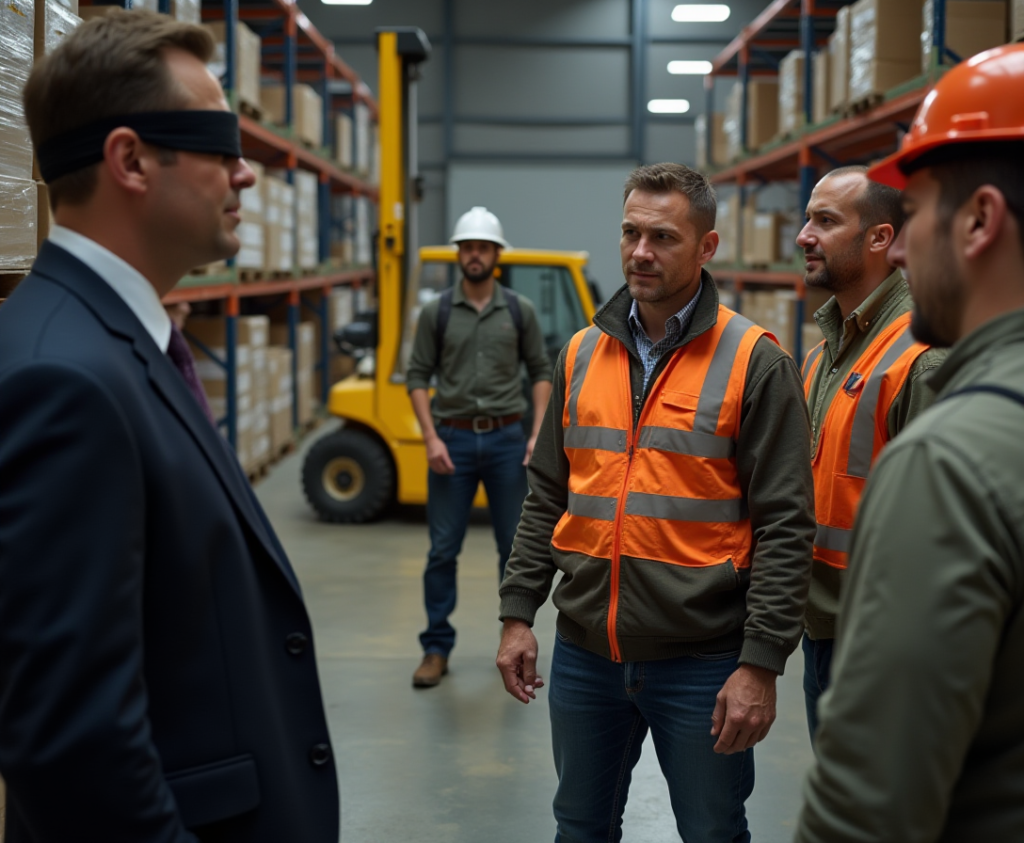
Complacency does not always look like laziness or carelessness. It can look like confidence, speed and decisiveness - as I'm sure you can recognise in the image above.
Captain Edward J. Smith possessed decades of maritime experience and had reached the pinnacle of his profession. Yet, despite his considerable skill, competency and authority as captain, he remained an employee of the White Star Line, operating within the expectations and commercial pressures of a much larger organisation.
The tragedy that followed was not caused by one simple oversight, one dismissed warning or one person’s refusal to acknowledge risk. It emerged through a combination of decisions, assumptions, pressures and vulnerabilities. This is precisely what makes the Titanic such a powerful illustration of leadership complacency: extensive experience and proven competency do not make any individual - or organisation - immune to risk.
Leadership Complacency can sound like:
The professional may still be highly skilled. Their past decisions may have been consistently successful. However, familiarity can encourage the mind to reach a conclusion before all the available information has been considered.
A doctor may recognise a familiar collection of symptoms while overlooking the one detail that makes this case different.
An engineer may trust a reliable calculation while failing to account for an unusual environmental factor.
A builder or tradesperson may rely on years of experience without checking whether the materials, regulations or surrounding conditions have changed.
A leader may assume they understand a member of their team because they have managed similar people and situations before.
Expertise allows us to see patterns quickly. Complacency persuades us that the first pattern we recognise must be the correct one.
The solution is not to distrust experience. It is to combine experience with curiosity.
These questions protect competency from becoming closed thinking.
This post was inspired during the TTBCA's Friday Coffee Drop-in, with conversations about supplements, medical staff and other professional systems. However, the questions it raised inspired me to write about something that reaches far beyond medicine. A human pattern that sits quietly in every skilled and unskilled profession or trade.
These patterns are particularly difficult to manage in larger heirarchies, disconnected teams, and particlularly relevant to remote leadership among professionals with high level qualifications. Every one of their decisions impacts the organisations appearance in public, and the likely success in many ways beyond client or patient retention.
When people work in the same physical environment, team leaders receive a continuous stream of information. They notice changes in tone, energy and behaviour. They overhear conversations, observe how colleagues respond under pressure and see where processes are becoming strained.
Remote leadership removes many of these informal signals. Directors, board members, shareholders and CEO's rely on filtered feedback. Chains of stores, hotels, garages, also have remote leadership challenges. Most of this is addressed through 'data' rather than human interaction and genuine intuitive leadership skills.
A scheduled video call may show that a project is on target while concealing the exhaustion required to keep it there. A written update may appear reassuring while omitting the concerns that somebody does not feel safe enough to raise. A professional may continue delivering excellent work while gradually becoming isolated, overloaded or disengaged.
The absence of visible conflict does not necessarily mean that a team is functioning well. This is data driven leadership with people second.
Remote leaders must therefore become more intentional about listening beyond the numbers. They need to look beyond whether tasks have been completed and remain curious about how those outcomes are being achieved. High success in data could speak of too much pressure in the functional aspects of the business. This includes mental health issues, which then creates complacency risks.
The medical profession above all exists on this data-first people-second culture, often cited back as success in political speeches.
What should really be questioned is:
In remote environments, company culture cannot depend upon chance conversations or occasional office contact. It must be communicated through consistent leadership behaviour on all levels. Those on the working front are the ones who know best, what is or not working well regardless of data wins.
Company Culture Is Generated from the Top Down
Company culture may be described in policies, values and mission statements, but it is created through what leaders repeatedly demonstrate, reward, tolerate, overlook and ignore.
If senior leaders respond defensively when challenged, that behaviour travels down through the organisation.
If pressure from above causes managers to conceal problems, their teams learn that appearance matters more than accuracy.
If speed is praised while thoughtful questions are treated as obstruction, people eventually stop sharing concerns.
Conversely, when leaders demonstrate curiosity, accountability and emotional awareness, they give others permission to do the same.
A healthy top-down culture does not mean leaders must have every answer. It means they establish the conditions in which the right information can reach the right people before it is too late.
This is especially important when managing qualified, capable professionals. Their competence should be respected, but it should never make challenge unnecessary. Experience at every level benefits from another perspective.
The most effective organisations do not force people to choose between confidence and openness. They value both.
There are times when expertise needs to return to the attentiveness of the learner.
Not because the professional has lost their ability, but because conscious attention helps them notice what automatic thinking may have filtered out.
This might mean:
The strongest professionals are not those who never question themselves. They are those whose confidence is secure enough to remain curious.
They understand that competency is not a destination. It is a responsibility that must be maintained through learning, reflection and practice.
The journey from learning to intuitive problem-solving is something to be proud of. It represents years of attention, effort, mistakes, resilience and accumulated wisdom.
Yet leadership asks us to go one step further.
It asks us to recognise when our experience is illuminating the situation and when it may be narrowing our view. It asks us to notice the person whose uncertainty, silence or different perspective contains information we need.
Complacency often enters quietly.
It does not announce itself as poor leadership. It arrives disguised as certainty.
The answer is not less confidence. It is confidence balanced by emotional awareness, professional curiosity and a culture in which people are encouraged to speak.
Because the moment we believe there is nothing more to learn may be the moment we need to listen harder.
To book a Strategic Emotional Leadership Strategy Session with Kay Reeve - Emotional Awarness Expert
Message me via the Contact Page in the first instance or find me on LinkedIn
Join us for an insightful conversation with Kay Reeve. She is an Emotional Awareness Expert. Kay clearly shows how emotions affect sleep quality and much more. She explains that emotions are not just conscious feelings. Instead, emotions work at a subconscious level. They are even active during sleep, helping our body function. In fact, emotions impact everything from our breathing to our dreams. This deeply influences our overall emotional health.
Discover how understanding the human emotional cycle can help you. You will learn about its four core emotions. This knowledge empowers you with practical emotional regulation techniques. Therefore, you can navigate life's challenges more easily. You will find relaxation, manage stress, and relieve anxiety. Furthermore, you can cultivate happiness on your own terms.
Kay shares her personal journey. For example, she helped her son cope with depression. From this experience, she created a powerful framework. This framework teaches how to recognize and redirect your emotional states. Ultimately, this offers crucial sleep tips for better rest.
This discussion will give you key insights. You will learn about managing emotions for better sleep. Discover how to drive your emotions, rather than letting them drive you. This leads to a calmer, happier, and more restorative life. Explore the power of mindfulness for emotional balance and sleep. Then, unlock strategies for truly restful sleep.
Watch the full video to transform your understanding of emotions. Consequently, you will find a clear path to superior sleep and holistic emotional well-being!
Thank you to Yewande Ralph of the Natural Fragrance Company, and Better Sleep Clinic, for inviting me to talk about Emotional Awarneess for healthy sleep.
In an exceptional event online on 13th November 2025, I launched my new book 30 Love Values as part of a combined event with my group the Self Help Bookshelf, and Davion Cares Foundation.
You can find details of 30 Love Values here, along with the launch interview from Oliver Marcelle, a relationship coach who praised the book highly.
This was not just a book launch for 30 Love Values, but a global online event on World Kindness Day, with Fundraising Effort for Davion Cares Foundation, caring for 62 children in Uganda.
Following the launch, we were joined by mystery guest Richard Crossman aka Santa Dundas, a Canadian actor, voiceover artist, and professional Santa, who joined us in full costume to support. Check out the video below, where Santa greeted the zoom audience, talking about the book launch, and talking to Ben Mukasa - Founder of Davion Cares, to support the fundraising efforts to help pay for one year's rent...
...so he has a roof to land on - and keep these children safe off the streets.
Other networking colleagues of mine from Silvatree and TTBCA - The Trusted Business Community Association (several who were present at the book launch event), are working on more fundraising events for food, clothing, education, healthcare, and more, on 4th December 2025.
Of all the gratitude's I've shared this year, receiving a copy of the receipt to say the rent has been paid for the year is top of the list. I geniuinely share my gratitude to 'everyone' who helped at the event, attended on the night, and to those who couldn't come, but donated all the same. You have all helped keep a roof over the heads of 62 homeless children for another year.

Another reason I am so passionate about helping Ben, is his holistic approach to supporting these beautiful children, including providing mental health support and education, empowering them with the best possibilities for a successful future.
Anyone ordering a personalised greeting up to 15th December can still continue supporting Davion Cares. Find details at Santa Dundas
To Rory Lemon, Sue Bayley, Rick McKenzie, Andrew Crawford, Ben Mukasa, Nicholas and Jesse of Davion Cares, and all the amazing guests: Once again, a massive thank you to everyone who helped raise and donate funds for Davion Cares Foundation at the book launch for 30 Love Values.
Why and how four authors collaborate, to help YOU.
The Self Help Bookshelf started in September 2024, when Kay Reeve was embarking on another self-publication mission, and decided to support other aspiring authors at the same time.
Rest of post To Continue.... this is a test post for now.

Being a depression speaker, or as I prefer to call myself - an Emotional Awareness Expert, gets some very varied reactions. Some people laugh and tell me I should be a millionaire. others say "Couldn't you find something more interesting to talk about?" or "Your should do something that makes you happier."
I love what I do, and I never find it boring, or depressing. Helping other people is what most careers are based on. HOW we help other people is what gives us a job. WHY we choose to help other people, gives us a purpose.
Think about what your How and Why are based on. Why did I choose mine?
Having a child with ASD, who suffered suicidal depression for 12 years, I know how hard it was to get help. I've seen how it affected my son, myself, his father, and his sister. I know how it played out in interactions among the wider family, schools, with friends, and in society. I discovered how little anyone could or would support us, even with qualifications. No one had the 'right' answers or solutions.
My son was 20 years old, barely able to tell the day of the week, let alone live his life. I sat with him through another deep suicidal depression one night, for three hours. I was ready to call the mental-health unit that night, but I knew that no one could really help. As a parent I had felt powerless for years, dealing with my son's emotional outbursts and suicidal tendencies.
That night, a lighbulb went off in my head...
"My son can't understand his emotions - because he can't SEE them!"
That night was the last time my son ever talked about wanting to die. That was the beginning of my transformation as a parent, and to becoming a speaker, mentor, and trainer. I re-trained in public speaking, to talk about depression in neurodivergent teens and young adults.
That moment, I realised I needed to take a different approach. I started using colour, and drawing out HIS emotional language, to talk to him, and teach him how to understand his own emotions. He immediately started engaging in conversation instead of avoiding it. He became curious, and more self-aware. I went on to create a whole strategy, writing books, and create online courses.
Becoming a depression speaker was the most valuable job I could create, with my HOW and my WHY. This work led to my diagram of the Emotional Cycle, and the framework in my book Brain Unchained.
My first ever public speech about depression, was my TEDx Talk 'Tackling Teenage Depression' in 2017. Since then I have spoken in various small groups, countless zoom meetings and online workshops, training sessions, and mentoring programs. I've spoken at educational establishments from high school to university. More recently I spoke at a couple of local government funded events. These were for disability inclusion, and for health professionals working in collaboration.
For me it's exciting to see the hope on people's faces. To see their recognition that I've created a process they can connect with rapidly. A toolbox for talking that puts the power of transformation in the hands of parents, teachers, support workers and more.
For me the excitement is in seeing a movement of an emotional revolution coming together, one talk at a time. There's something magical about seeing the positive reactions in people, and hearing how people's lives are changing. All because of that lightbulb moment back in 2015 - sitting with my son when he was suicidal. To know that what we went through is helping others - that's my WHY.
What's really exciting for me is seeing ahead at the transformations yet to take place, and knowing the impact my work can have on the narrative of neurodivergent teen depression, through parenting, teaching, therapy, and workplace support.
I hear therapists, life-coaches, support workers, and parents, saying how they feel powerless to help those with the deepest depression.
How can a therapist help clients process emotions, when they don't know how to talk about their emotions? How can we get clients to connect with their self-awareness first?
It often results in weeks of therapy for a client to even open up. This can result in the client giving up, and walking away without healing emotionally. This happens more where therapies are limited sessions per client.
It is these therapist, life-coaches, support workers, and emotionally aware parents, that I am seeing the most enthusiasm from. The energy I get from professional people who know that current systems are missing something vital, astounds me. It's shocking to know that even with their best efforts, and skills, something still isn't hitting home in clients with depression. That's where I get excited, knowing I have NEW answers and solutions that hit the spot!
These professionals are the one's I'm seeing get excited that I have a way to fill that gap. |I have a way to help them, help their clients achieve self-awareness and emotional awareness, with a visual diagram of the emotional cycle.
As well as working 1-1 with clients, and running online workshops, I get excited at the idea of sharing this powerful strategy with larger audiences. I'm a confident speaker, with a powerful message, and inspiration in abundance.
If you have an event where you are looking for an innovative speaker who's creating an emotional revolution - then contact me for a and let's talk about your event needs.
Teenage anxiety is very common but that doesn't mean telling them it's ok to have anxiety and leaving them to suffer with it. When a teenager or any human being has anxiety, fear, panic, or any emotion that fits within this category, the best thing to do is help them understand the following points.
Let's break these down one at a time, and give you the tools to support them through this process...
Teenage anxiety in terms of emotions is the same as adult anxiety. It is a build up of fears and avoidances like worrying about being late for the bus or school. There are many things that to adults seem like a small concern, but to a child or teenager, these anxieties have built up over time due to negative experiences in the past - often repeatedly.
Anxiety is always about the future, from seconds ahead, to their whole life. Worrying that the teacher is walking in their direction, or that a parent is going to ask them to do chores - not in a requesting or respectful voice, but by demanding, shaming, or shouting.
Most teens hate being judged - at home, and in school - even if they don't say it. It is a persistently unpleasant feeling within the body, physically anticipating the next event. They worry about being judged for how they look, their body, their hair and their clothes. It makes them anxious about the things they say or their accent if they've moved location. Hormones, periods in girls, genital 'reactions' in boys, and gender issues, all add to the list of personal anxieties.
Good question! Why do they have all these anxieties? In short, they were taught to be anxious.
Most children are taught to be conscious about their looks. They are praised when they look nice, pretty, handsome, well kept - and that's ok. They are also taught that they need to brush their hair and teeth, wash their face - and that's ok too - in fact that's essential.
Being told they look scruffy, messy, dirty, or unhygienic, is where the damage starts. If it was said in a derogatory tone, shaming them into being clean and tidy, or blaming them for messing up their clean clothes - it likely stuck with their subconscious that they shouldn't feel judged. They believe this will happen again and again - because that's what grown ups do. They learn that life is about avoiding judgement! That's where anxiety stems from.
Apply this in schools with teens being judged for standing out of line, or being late for lessons. Being told they don't have their shirt buttoned up properly or tie on straight. It all adds up on top of parental judgement. Add in their own low self-worth when they're mocked for asking questions or speaking up. Then there's the fear of answering questions, and being told they are wrong. For the class laughing at them. What about the homework results that are read out to the whole class - and they're in the bottom results yet again. Or even at the top, and other children judge out of jealousy.
Lastly, there's judgment from peers. At home from siblings, in family settings from other extended family, and in school from classmates and worst of all - close friends. There's nothing more anxiety driving that being bullied at school or being ousted by friends who judge, control, and manipulate. Of course at their age, they are not aware of the 'abuse' this puts on them. They are not aware that some so-called friends are not true friends. Even those with close friends, still face all the other anxiety above, and from the people around them at all times.
Well, you would like to think so, but there's a great deal to consider there too. They are facing all the following challenges and more, when going through teens from the age of 13 - 19 years old:
Address each of these and find out their anxiety levels of each:
This may include the following for MANY teenagers:
Abuse types (physical, verbal, sexual, self-abuse, blackmail, coercion, control, financial, health - such as Munchhausen's - and more). This list is not exhaustive, and yet sadly gives a clear idea of what many teenagers lives are truly like. A far cry from the idealistic picture painted by society - leaving many feeling low self-worth, unable to fit in, unloved, not listened to, and unvalued. Even as adults we need to feel valued.
To help any teenager or young adult, open up about their anxieties, fears and worries, they need a Safe Space for Talking. Safe Space it not a physical location as much as an opportunity to speak without fear of judgement. You can learn more about this in my online course at https://kayreeve.co.uk/courses/
When talking about emotions, it helps to recognise that every emotion is 'telling us something'. Teens rarely understand this, and only see anxiety as an unpleasant feeling that never seems to go away. They think anxiety presents at every opportunity, and seems to have no purpose other than making them feel bad about themselves. When talking to adults about their anxiety, teens are often told it's normal - everyone gets anxiety! This narrative is NOT helpful. All that can change, starting here!
YES everyone does get anxiety but they don't have to live with it persistently. It's not necessary to live with all that anxiety when they could be feeling happy, confident and motivated instead.
First of all, recognising that an emotion is there to help us learn something, starts to turn their avoidance into curiosity. Being curious about something can quickly open up conversation and have them seeking answers instead of spiraling deeper. There is however an art to understanding what those pesky feelings and emotions mean. This one is easier to address by taking my FREE Emotional Cycle Intro course. In just 10 minutes, you can help change a teenagers' life, by working through this with them, and talking about their emotions with true understanding from them that emotions have a pattern and a purpose.

Emotional Cycle Intro FREE online course for parenting teens and young adults.
Discover the power of a simple visual tool for emotional learning, in neurodivergent teens and young adults, and the tools for talking about emotions.
Once you and your teenager, or young adults that you are supporting, have understood the basics of the Emotional Cycle, it is time to find the cause of their current anxiety first. Acknowledge their strength in speaking about it. Work through a list of all the reasons they feel anxious. Ask them written down the list on paper, or help them by writing, as they talk. Now they can see what was in their head, objectively.
Looking at each anxiety and the cause, talk to them about why they felt that way in the first place. For example being late for the bus. If the anxiety was about being late, that was the cause. Now look for the root cause.
These are some helpful question to start with. Always avoid pressuring them to answer. This is about them being able to speak, and never about your needs or emotions.
Remember to hold 'Safe Space' throughout all the conversation.
Now you have an idea where there anxieties are coming from, it is time to talk about what happens if they encounter this situation again. It is time to 'equip them' with the 'tools' for managing their own emotions.
Again, keeping 'Safe Space' never give orders on how to handle something as that adds to the anxiety of failing you if they don't achieve it. Give them examples of how THEY could approach it. Talk through possible solutions and let them make the ultimate decision on which solution FEELS right for them.
Let them know that it's all 'learning' and it may take some practice and adjustments to learn new ways of processing daily life, that removes their anxieties, but with determination and repetition of safe space conversations, they will get there.
If you are able to work through multiple issues with them and support them long term, check out my book Brain Unchained on Kindle: Brain Unchained
If after talking through things, the teenager or young adult is still suffering high anxiety, there many be some other underlying issues such as diet, smoking or substance abuse, medications, or unresolved trauma. If any of these are present, seek further help from the right professionals. These types of anxiety tend not to resolve themselves through talking to a parent, teacher, or manager.
Teenage anxiety is happening for a reason. Teens are not equipped with the mental or social skills to resolve anxiety them self. You may have been unwittingly adding to it, and YOU have the power to help them create lasting change, starting here.

Turn Around my Son was a weekend creative music project of inspiration, using AI as a tool to add the parts I didn't have the skills for. It's my first ever song, and the first time I've used AI music. It sparked thoughts around being human - Is AI good or evil? Some media would have us believe it is.
This got me thinking how we can learn from it and pay the right mentality to teens and young adults.
My biggest business value is Being Human. There are two sides to that. Me being authentic and real. I'm not about generically created AI content in a faceless money grabbing business. I value creating a real connection with you, through various channels, using various tools. In the background I use a little AI, but you wouldn't know how or where because it assists me in small task. I don't use AI to create key content like this. This is ME.
Secondly, my whole business is about teaching others to remain human in a world filled with technology, machinery, processes, and now AI. To do that, I have to truly consider the impact each of these have in many ways. As an emotional awareness expert, there is much for me to observe and study about emotional reactions to AI. It is my drive to remain human in coexistence with everything new, in a world that's rapidly changing.
My quote is "Mastering Life is all about Mastering Change."
So how can we accept Change, without changing ourselves?
The answer is, we can't.
Or can we?
OK maybe not the answer you expected but let me explain why...
Let's go back a few years to the invention of the knife. First they were flint, then metal. They are early tools that massively changed humanity. So how are people's emotions affected by knives?
The point being, that humans both love and hate knives. How they use them is an individual choice. How they react to knives is personal based on circumstances. I personally don't like people possessing weapons at home, as they are a temptation during emotional rages. I've been on the receiving end of that, held at knife point, but someone who collects them, wouldn't see it from my point of view.
When something goes wrong with AI, people react to it as a whole and call AI evil, but people don't stop using kitchen knives, when other people have been killed or hurt by them. Why should AI be any different?
Next comes a club or hammer, and same pattern of behaviour. People change every time something new becomes viral or household, yet the reactions, still fit with the patterns above.
Each human will find their own way to use or avoid using every new invention. Each invention generates the same pattern of emotions too. Embrace it, react to it, avoid it, fight against it, remain neutral, or feel overwhelmed by it. That's really the only options there are. Put that with the options above, and there's human change, where a world is evolving rapidly, yet humans are still dealing with change in exactly the same way as thousands of years ago.
Emotions are not taught, we are expected to inherently learn them from our elders, peers, tutors, and life.
As a result, each emotional reaction creates an expected and unavoidable pattern of counter-change. For example, the human reaction to the negative use of knives, rulted in creating longer knives called swords. Then guns, now even nuclear weapons are being challenged. Each change being a ripple effect of the person who chose to first use a knife as a weapon again fellow man. Now we are at nuclear weapons.
What about the invention of money? Same pattern of fraud, self serving & surviving, to skills in accountants, charities helping others, creativity in investments, and the big sales in banking and loans.
Chemistry turned into poisons, potions, medications, and recipes for health and wellbeing, along with big pharmaceutical sale companies. (Big rabbit hole to avoid)
Computers instantly created hackers, scammers and more harmful intent as per human patterns throughout history. Then comes the generic users, gamers, and those who found their purpose in computers in so many ways. Computers have taken the world by storm, even integrated into hand held phones, yet we are still the same humans following the same old patterns in how we use them.
So with AI rapidly integrating into every device we own, should we be be panicked? Should we truly see this as the rise of the machines coming to condition us and take over the world?
NOOOoooooooooooo!!!
Am I about to be swallow up by AI and change my ethics? Equally no. 
Mastering Change - where does that fit in? 
Sometimes the best way to accept the changes we cannot control is to change our perspective. It's all about point of view, and my expertise is helping people see that different point of view.
Let's look at AI for a moment as just another set of tools, another change to humanity, and another repeat pattern in human behaviour. After all it's human created, and can be programmed or reprogrammed by humans.
There's one tool I missed out till now for a reason - INFORMATION. This is another tool that the media use to scare and control us. A perspective we all know but let's put that into perspective of the human patterns for a moment. Thinks about the ways people use information, just like the pattern of knives.
The real question is if AI is any more dangerous than a knife? Or is it the person using it?
Any of the tools we've talked about can also be harmful to the person using them, as well as harmful to others. AI is just another tool with exactly the same potential.
I see no difference in anything that has changed in this world except on thing.... culture. How information and instructions are passed on. How information is shared, and what we, as individual humans choose to make of our own beliefs from centuries and millennia of misinformation. Yet culture still remains the driver of many beliefs in every community. Culture's are also tools to create communities, that also both heal and harm, depending on perspective yet again.
Summary in short: It's people that do good or bad things with the tools they use. The tools themselves just exist. They are neither good nor bad till they are in human hands.
What I really want you to ask yourself is - which pattern of human behaviour do you follow?
When AI is already here, its neither good nor bad. It just is. What really counts, like a knife, money, and everything human created, it how we each choose to use it as a tool.
We are still human and always will be. What we really need to change is emotional awareness.
Yesterday, I wrote some lyrics about my son's journey with depression, from a mum's perspective. I want our journey and the strategy I use to help others. Music is an powerful way to connect and share information. I could write the lyrics but don't have the skills to turn it into a song. Nor the funding to get someone else to do it. So I used a tool that has never been available before - Suno AI music generator.
Is that good or bad?
We use generators to provide energy, and factories to create food and medication, so why is music frowned upon, if it actually helps someone? A creation that would otherwise not exist.
My creation does not stop anyone playing an instrument, performing in theatre or concerts, and it doesn't stop people wanting to go to live concerts to follow their favourite band or singer. AI has NO place in that arena - or does it?
Watch ANYMA and see how a single DJ commands the stage with AI and automation. This is no different than the computer playing synthesized and pre-programmed music.
I'm no artist, and I don't have the skills to turn my lyrics into a song, so it would sit here unseen. I would not hire a musician or singer. Therefore I have not stolen anything from anyone. This is my single creation, to help and inspire you.
I am still a human being, creative, using AI with purpose.
How will your view of AI change now? How many other things will fall into a new perspective for you?
I hope you find your place with or without AI, avoiding frustration and anger, finding peace, and accepting your own perspective with purpose.