Every professional begins somewhere. A doctor has a first patient. An engineer has a first design. A builder has a first project to manage, and every skilled tradesperson once had to think carefully about tasks they can now complete almost without conscious effort.
At the beginning, learning is deliberate. We follow instructions, refer to manuals and check each stage before moving on. We ask questions because we know there is still a great deal we do not know.
With practice, the steps become familiar. Knowledge turns into ability, ability develops into competency, and competency eventually becomes something that looks almost effortless.
This is the professional learning curve. It is how we become good at what we do.
However, the very experience that makes us more capable can also create a hidden vulnerability. Somewhere between competency and expertise, confidence can quietly become complacency.

Learning gives us information, but information alone does not make us competent.
Competency is built through practice: applying what we know, observing the outcome and adjusting our approach. Sometimes we succeed. Sometimes we make mistakes. Sometimes another person notices something we have overlooked.
Each experience adds another layer to our professional understanding.
A newly qualified doctor may consciously work through symptoms, test results and possible diagnoses. An experienced doctor may recognise a familiar pattern within minutes.
An apprentice may carefully measure and check every cut. An experienced builder or tradesperson may recognise that something is out of alignment before reaching for a spirit level.
An engineer may initially rely heavily on formulas, processes and technical specifications. Over time, they begin to notice how systems behave beyond what is immediately visible on the page.
This is where practice begins to develop into professional competency. Competency evolves into intuitive practice.
Intuition is sometimes mistaken for guesswork. In experienced professionals, it is often something much more substantial.
Professional intuitions are built from accumulated knowledge, repeated experiences, observed consequences and recognised patterns. The brain becomes increasingly efficient at comparing what is happening now with what it has encountered before.
yet an experienced professional senses that something important has been missed.
This intuitive response can be extraordinarily valuable. It allows experienced people to recognise risks, identify emerging problems and make effective decisions without consciously revisiting every lesson they have ever learned.
It is one of the great advantages of experience.
It is also where another risk can appear.
The more often our intuition proves correct, the easier it becomes to stop questioning it.
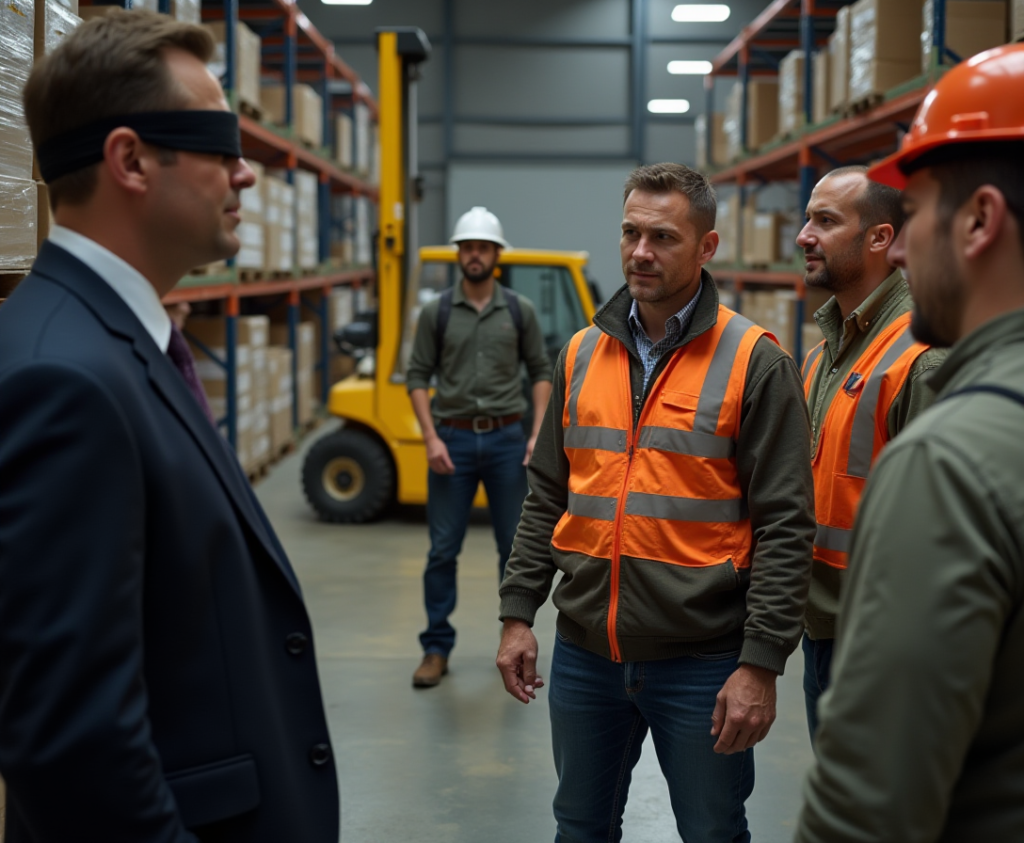
Complacency does not always look like laziness or carelessness. It can look like confidence, speed and decisiveness - as I'm sure you can recognise in the image above.
Captain Edward J. Smith possessed decades of maritime experience and had reached the pinnacle of his profession. Yet, despite his considerable skill, competency and authority as captain, he remained an employee of the White Star Line, operating within the expectations and commercial pressures of a much larger organisation.
The tragedy that followed was not caused by one simple oversight, one dismissed warning or one person’s refusal to acknowledge risk. It emerged through a combination of decisions, assumptions, pressures and vulnerabilities. This is precisely what makes the Titanic such a powerful illustration of leadership complacency: extensive experience and proven competency do not make any individual - or organisation - immune to risk.
Leadership Complacency can sound like:
The professional may still be highly skilled. Their past decisions may have been consistently successful. However, familiarity can encourage the mind to reach a conclusion before all the available information has been considered.
A doctor may recognise a familiar collection of symptoms while overlooking the one detail that makes this case different.
An engineer may trust a reliable calculation while failing to account for an unusual environmental factor.
A builder or tradesperson may rely on years of experience without checking whether the materials, regulations or surrounding conditions have changed.
A leader may assume they understand a member of their team because they have managed similar people and situations before.
Expertise allows us to see patterns quickly. Complacency persuades us that the first pattern we recognise must be the correct one.
The solution is not to distrust experience. It is to combine experience with curiosity.
These questions protect competency from becoming closed thinking.
This post was inspired during the TTBCA's Friday Coffee Drop-in, with conversations about supplements, medical staff and other professional systems. However, the questions it raised inspired me to write about something that reaches far beyond medicine. A human pattern that sits quietly in every skilled and unskilled profession or trade.
These patterns are particularly difficult to manage in larger heirarchies, disconnected teams, and particlularly relevant to remote leadership among professionals with high level qualifications. Every one of their decisions impacts the organisations appearance in public, and the likely success in many ways beyond client or patient retention.
When people work in the same physical environment, team leaders receive a continuous stream of information. They notice changes in tone, energy and behaviour. They overhear conversations, observe how colleagues respond under pressure and see where processes are becoming strained.
Remote leadership removes many of these informal signals. Directors, board members, shareholders and CEO's rely on filtered feedback. Chains of stores, hotels, garages, also have remote leadership challenges. Most of this is addressed through 'data' rather than human interaction and genuine intuitive leadership skills.
A scheduled video call may show that a project is on target while concealing the exhaustion required to keep it there. A written update may appear reassuring while omitting the concerns that somebody does not feel safe enough to raise. A professional may continue delivering excellent work while gradually becoming isolated, overloaded or disengaged.
The absence of visible conflict does not necessarily mean that a team is functioning well. This is data driven leadership with people second.
Remote leaders must therefore become more intentional about listening beyond the numbers. They need to look beyond whether tasks have been completed and remain curious about how those outcomes are being achieved. High success in data could speak of too much pressure in the functional aspects of the business. This includes mental health issues, which then creates complacency risks.
The medical profession above all exists on this data-first people-second culture, often cited back as success in political speeches.
What should really be questioned is:
In remote environments, company culture cannot depend upon chance conversations or occasional office contact. It must be communicated through consistent leadership behaviour on all levels. Those on the working front are the ones who know best, what is or not working well regardless of data wins.
Company Culture Is Generated from the Top Down
Company culture may be described in policies, values and mission statements, but it is created through what leaders repeatedly demonstrate, reward, tolerate, overlook and ignore.
If senior leaders respond defensively when challenged, that behaviour travels down through the organisation.
If pressure from above causes managers to conceal problems, their teams learn that appearance matters more than accuracy.
If speed is praised while thoughtful questions are treated as obstruction, people eventually stop sharing concerns.
Conversely, when leaders demonstrate curiosity, accountability and emotional awareness, they give others permission to do the same.
A healthy top-down culture does not mean leaders must have every answer. It means they establish the conditions in which the right information can reach the right people before it is too late.
This is especially important when managing qualified, capable professionals. Their competence should be respected, but it should never make challenge unnecessary. Experience at every level benefits from another perspective.
The most effective organisations do not force people to choose between confidence and openness. They value both.
There are times when expertise needs to return to the attentiveness of the learner.
Not because the professional has lost their ability, but because conscious attention helps them notice what automatic thinking may have filtered out.
This might mean:
The strongest professionals are not those who never question themselves. They are those whose confidence is secure enough to remain curious.
They understand that competency is not a destination. It is a responsibility that must be maintained through learning, reflection and practice.
The journey from learning to intuitive problem-solving is something to be proud of. It represents years of attention, effort, mistakes, resilience and accumulated wisdom.
Yet leadership asks us to go one step further.
It asks us to recognise when our experience is illuminating the situation and when it may be narrowing our view. It asks us to notice the person whose uncertainty, silence or different perspective contains information we need.
Complacency often enters quietly.
It does not announce itself as poor leadership. It arrives disguised as certainty.
The answer is not less confidence. It is confidence balanced by emotional awareness, professional curiosity and a culture in which people are encouraged to speak.
Because the moment we believe there is nothing more to learn may be the moment we need to listen harder.
To book a Strategic Emotional Leadership Strategy Session with Kay Reeve - Emotional Awarness Expert
Message me via the Contact Page in the first instance or find me on LinkedIn
Leadership Qualities that Matter
For decades, leadership has been defined by visibility, decisiveness, confidence, and control. Leaders were expected to push forward, manage performance, and keep things moving — often at any personal cost.
Yet many organisations are quietly struggling.
Burnout is increasing. Teams feel disconnected. Managers are overwhelmed. Clients sense emotional tension. Families absorb the pressure leaders carry home at the end of the day.
This isn’t a failure of intelligence, experience, or strategy.
It’s a deficit of emotional awareness.
In today’s complex and people-centred world, emotional awareness is no longer a soft skill. It is the foundation that determines whether leadership qualities support growth — or silently undermine it.
When people search for leadership qualities, they often expect a checklist:
• Confidence
• Communication
• Decision-making
• Integrity
• Resilience
These qualities matter — but they don’t operate in isolation.
Every leadership behaviour is delivered through a human nervous system. Leaders don’t just make decisions; they make decisions from an emotional state. They don’t just communicate information; they transmit emotions through signals — whether they intend to or not.
Without emotional awareness, leadership qualities become distorted:
• Confidence turns into defensiveness
• Decisiveness becomes reactivity
• Resilience becomes emotional suppression
• Communication becomes control rather than connection
With emotional awareness, those same qualities become stabilising, trustworthy, and effective.
Emotional awareness is the ability to notice, name, and regulate your internal emotional state — and understand how it impacts others.
This includes:
• Recognising emotional triggers
• Noticing stress responses in real time
• Understanding how pressure shapes behaviour
• Choosing responses instead of reacting automatically
Most leaders were never taught this.
They were trained to think faster, push harder, and stay strong — often at the expense of their nervous system.
Unprocessed emotional pressure doesn’t disappear. It leaks into meetings, emails, decision-making, and relationships.
Emotional awareness does not mean oversharing, losing authority, or becoming emotionally reactive.
It means:
• Internal regulation before external action
• Calm authority instead of emotional control
• Leadership without emotional fallout
Emotionally aware leaders don’t avoid difficult conversations. They handle them with greater clarity and impact.
The most effective leaders lead themselves first.
Self-leadership means noticing when you are stressed, rushed, overwhelmed, or emotionally overloaded - and understanding how that state affects your behaviour.
Without emotional awareness, leaders unconsciously offload pressure onto teams.
With emotional awareness, leaders create psychological safety, simply through how they show up.
Pressure is inevitable in leadership. Dysregulation is not.
Emotionally aware leaders can:
• Pause before responding
• Stay present during conflict
• De-escalate tension
• Hold steadiness when others are reactive
People do not follow titles. They follow nervous systems that feel safe to work with.
Empathy in leadership is often misunderstood.
It is not about rescuing, fixing, or absorbing everyone else’s emotions.
Emotionally aware empathy looks like:
• Listening without defensiveness
• Acknowledging emotional reality
• Holding boundaries without withdrawal
• Responding thoughtfully rather than reflexively
This is especially vital when supporting neurodivergent staff, stressed teams, or emotionally complex environments.
Communication is not just about what is said - it is about emotional tone.
Leaders who lack emotional awareness often say the right words from the wrong state.
Emotionally aware leaders communicate with:
• Consistency between words and energy
• Calm authority
• Clarity without intimidation
This reduces misunderstanding, defensiveness, and emotional friction.
Change rarely fails because of poor planning.
It fails because leaders underestimate the emotional impact of uncertainty.
Change triggers fear, loss of identity or roles, and resistance rooted in a need for safety - not stubbornness.
Emotionally aware leaders anticipate emotional responses and pace change in a way that people can actually integrate.
Leadership does not stop at the office door.
The emotional state you lead from at work comes home with you. Families feel it. Relationships absorb it. Health pays the price.
Emotional awareness supports not only professional leadership, but sustainable life leadership.
The future of leadership is not louder or faster.
It is:
• More regulated
• More emotionally intelligent
• More human
• More sustainable
Leaders who develop emotional awareness retain trust, navigate complexity, and create environments where people can think, contribute, and thrive.
Leadership is not measured only by results.
It is measured by how people feel after interacting with you.
Emotional awareness is not an optional leadership quality.
It is the foundation that allows every other leadership skill to work.
To find out more about your Leadership Qualities and how Mentoring can help you, check out Kay Reeve's Training Options and book onto a workshop or request a free discovery call.

Each week I talk about parenting teens tips in my YouTube video podcast.
I talk through parenting struggles and challenges. I explain how teens, or young adults, can be affected by Life, and unwittingly by parents. Growing up, education, relationships, exams, and peer pressure all take a toll on their mental health and yet the solution is easier than you may imagine...
My parenting teens podcast creates positive progress for teenagers rapidly, through awareness and engaging conversations. I share personal development tips to help you can build trust, and grow together. Learn how different personal growth ideas support different challenges. Learn how to rebuild trust with your teenager through 'safe space' conversations. Also find out how using these tips can help them avoid the stigma of therapy and create natural healing at home.
This blame-free approach to parenting teens, creates the best possible future for you and your family. Imagine reducing stress, anxiety, and conflict - for you, your teen, and your family just by listening and talking. View the latest episode here about teens and parents, finding a way forwards, past denial. How to overcome the barriers of teens being in denial, and how to recognise denial in your parenting style.
I use visual learning elements, which is why I prefer to record my podcast episode on YouTube. It's hard to 'show' something on audio only. If you prefer audio podcasts, you can leave it running in the background, or listen through headphones while you continue what you are doing.
For more info and skills for parenting teens and young adults, check out my course online.
Check back weekly for more Parenting Teens Podcasts.

As I sat on my sofa in March 2022, it was a bright enough day but I had already been fighting my own depression for over a year. It seemed like there was no way forward, so the only things I had attached any meanings to, were all in the past, while the present seemed incredibly empty.
I couldn't put on the radio as songs triggered me. The T.V. wouldn't distract me any more from the relentless thoughts, and nothing else seemed to lift my spirits despite every effort to seek help. Even the medication wasn't helping at this point, actually making things worse. Now I had essential tremors too.
I tried a third type of antidepressant soon after, in April 2022. The tears stopped and healing finally began but the antidepressants don't do all the work. They get the process started but the rest was up to me.
Today seemed to be the only day that existed. There was no tomorrow, let alone a future. It felt like living that same miserable day over and over where I could see nothing ahead. I could only see the past which brought pain, tears, loss and rejection.
I had told myself many times that 'this was rock bottom' and life would get better, but it didn't. It seems I was doomed to go all the way, till I truly knew - this day was as rock bottom as I would go. This was when I saw that place that was Darker than Dark.
I sat in my sunlit room and watched as strangers walked by in my mind, knowing they were going. They were walking to a place of no return. I just stood there, with this feeling of impending doom, knowing that I felt - what they felt. I was sitting in my own darker than dark vision in depression.
I knew that feeling that was driving them forwards, while I just stood there and watched. I was in that same space mentally that so many others have been... in depression. Yet I knew despite temptation, that it wasn't my day to follow them into the darkness.
In this moment, I had a second sense, or an unheard voice like a telepathic message. It was telling me to come back and share the message. At first I wasn't sure how to put it into words.
Somehow I knew this message was to explain that when you find yourself in that really dark place - Stop! Don't follow the others. It's ok to be there and let your emotions process, but don't go any further. You can still turn around.
Don't walk, jump, or move. Just be still, and observe. Acknowledge that this is your rock bottom moment, and that turning back is the best option, even if you don't know why yet.
I knew that the journey back would be long, like the journey that took me there. Somehow I knew it was worth it even though I didn't yet know why.
I had the knowledge from my first book 'Brain Unchained' after helping my son through years of depression. I knew about the emotional cycle and what the map of if looked like. I knew where I was on that map. I was in the black, and at the very bottom of the cycle. That diagram helped me understand that darkness, and why I was seeing it. I also guided me to find my way out of the darkness.

Several weeks later the message was still weighing me down when I finally converted the message into words. It was a sudden inspiration and I rushed to grab my tablet and start typing. I was inspired to write it as a poem called Darker than Dark.
The following day inspiration hit again. I began writing about recovery from my darker than dark vision. It was a recovery I had yet to make, but it was laying out my path forward. I was setting the intent to recover. The intent to find colour again in the poem called Leaving than Dark.

Late in 2022, I finally found enough clarity of mind to put the two poems with a collection of my own photographs, to create my new book - Darker than Dark
Although the poem begins in that darkest of moments, the book is a beautiful journey of growing colour and inspiration. It shares hope and vision to keep going.
After the poems I added more of my favourite photos from my rather large collection, and added writing about how to use each photo for mindfulness. Because a few moments of using mindfulness techniques was sometimes all I could manage during depression. Yet the more I did it, the more it helped.
As I focused on sharing my journey, it helped me heal, one small bit at a time.
Some days I could only focus for ten minutes, then twenty, till I could finally sit for six hours one weekend, and voila - the book was created.
Now available in paperback, hardback and Kindle, I hope this book can help you find mindfulness, and add colour to even your brightest of days, or bring hope on the darker days.
May your life be a colour-filled journey of mindfulness too.
I have just started my memory journaling entries in my new book. I published My Journal The Gold Moments just one month ago, in May 2023. As I watched the coronation of King Charles III, I was talking to may father saying I recall Prince Charles as early as his 20's, being on TV and in the news. Now here he is being crowned the Oldest Monarch Crowned at his own coronation.
This goes in unison with me seeing Queen Elizabeth II go from a mother of teenagers - as Andrew and Edward were then - to being the longest reigning monarch, and seeing her funeral in 2022. She had become a grandmother, and great grandmother, going through all the same family drama many of us go through, while still being The Queen. If I had witnessed all this - what would my grandchildren witness? What will they talk about with their grandchildren in the future?
While I was discussing this, my father said how he remembered the funeral of Queen Mary (Mother of King George VI) and it made me think what my grandchildren will reflect on in future, at the coronation of Prince William - Prince of Wales which I hope to see, and later his son Prince George, which I am highly unlikely so see from this mortal plane. This got me thinking about memory journaling.
I was honoured the chance to see Prince George (on tv at least) as page boy, carrying the train for his grandfather King Charles III at his coronation. He looked every part a royal, and serviceman in his uniform, portraying a loyal and traditional future to come. One that my grandchildren are likely to be reflecting on with their children and grandchildren by then.
I now wonder what my grandparents remember as their earliest royal celebration. I wish I had something in a journal or notes to say so. I know my grandmother was a huge fan of the royals, and would paint portraits of the engagement photos from the latest magazine. While she painted, she chatted away about the lace wedding dresses, ornate carriages, and the Queen Mother - her favourite of all. If only my grandmother had left a memory journal with all her favourite royal memories in.
I now have many of my own memories about royal occasions. When my daughter was just one month old, my father (centre right) was working as a deaf-blind facilitator. The gentleman he worked for was a Services veteran.
Although Michael was still in his 30's, he had suffered devastating effects from two identical brain tumors at once. He was left deaf, blind, without a sense of taste or smell, and suffering epilepsy, yet he was a fighter. Michael had initially retained 10% vision, and started a desk-top publishing service. That was where my father began working for him.
Michael's work was aided by funds from The Princes Trust. That was how they were invited to meet with Prince Charles in 1992 - through the Princes Trust.
There is usually a protocol about standing too close to any royal, especially the next heir to the throne - as he was then. Prince Charles saw my father interpreting their conversation onto Michael's hand - like typing. He wanted to talk directly to Michael himself but didn't know the sign language. It all happened quite quickly and my father hadn't expected this. Michael was merely hoping he might get to shake hands with the Prince.
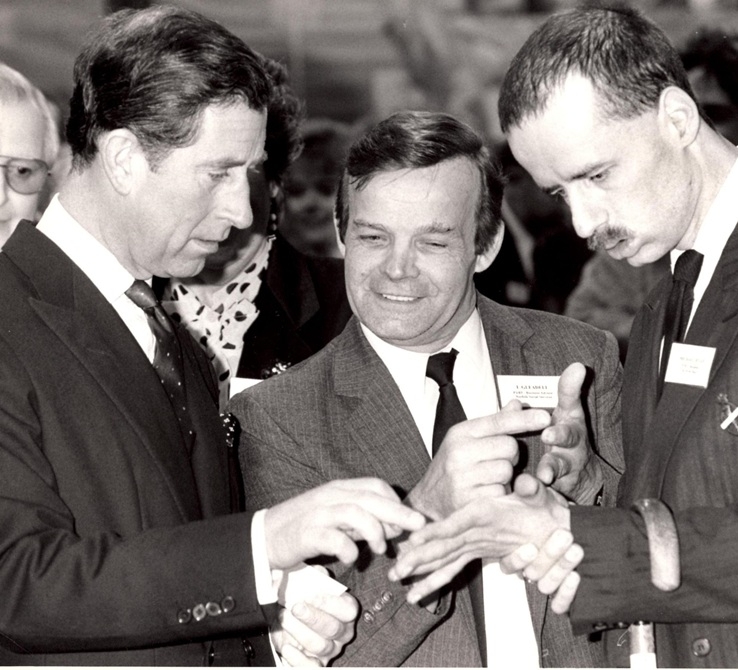
Photo of Prince Charles with my Dad & Michael in a rare moment.
My father let Michael know what was happening, then stood beside them as seen in the photo above. Prince Charles told my father what he wanted to say. Instead of my father tapping it onto Michael's hand, he tapped his own hand. Prince Charles then copied my father's actions onto Michael's hands, talking to him directly. It certainly made all of their meeting more special.
Prince Charles - now King Charles III as of today - has always has been a people's person. He stepped forward to do something out of the ordinary that day. It was simple, but it meant so much.
Their encounter created a memory to be handed down through my family. Even my grandchildren can see the photo on the wall at Grandpa's house but the photo needs words to help them understand it later in life, and keep the memory alive when we're no longer here to explain it. That's where memory journaling comes to mind.
Sadly that day my father met Prince Charles, also brought devastating news that Windsor Castle had caught fire. The humbling images next day of the Queen in her wellies, inspecting the ruins still come to my mind thirty years later as I write this blog post.
As I think about these moments, it is only a month after publishing 'My Journal - The Gold Moments'
I realise I could fill a volume, with memory journaling ideas like these alone, regarding important celebrations about royalty, meeting famous people, and headline news like the fire, Diana, and more.
My daughter at the age of 13, being home educated at that time asked me "How many kings and queens of England have there been?"
My face instantly recoiled through time and space. I was remembering the mono-tone hours of history lessons like life flashing before my eyes. I realised that the only thing I recalled was King Henry VIII had many wives and killed some of them. My honest reply was to point towards the computer as I said to her "Ask Google!"
To my surprise, she started searching, listing, chatting away as if she was listening to the latest TV soap. She went back to the computer every day, till a week later she came back with the answer Sixty Four. Some of the early kings had names I'd never heard of, such as Ethelred who reigned at the turn of century when the yearly dates jumped from 999 to 1000.
This was one of my favourite memories from home educating my children. I loved seeing my daughter learn more history in weeks under her own steam, than I ever learned in years at school. It was breathtaking and inspiring in many ways. It became a great conversation piece daily.
Then she said "I wonder how each got to take the throne from the others?" and so continued a beautiful project. Another one for the list of memory journaling.
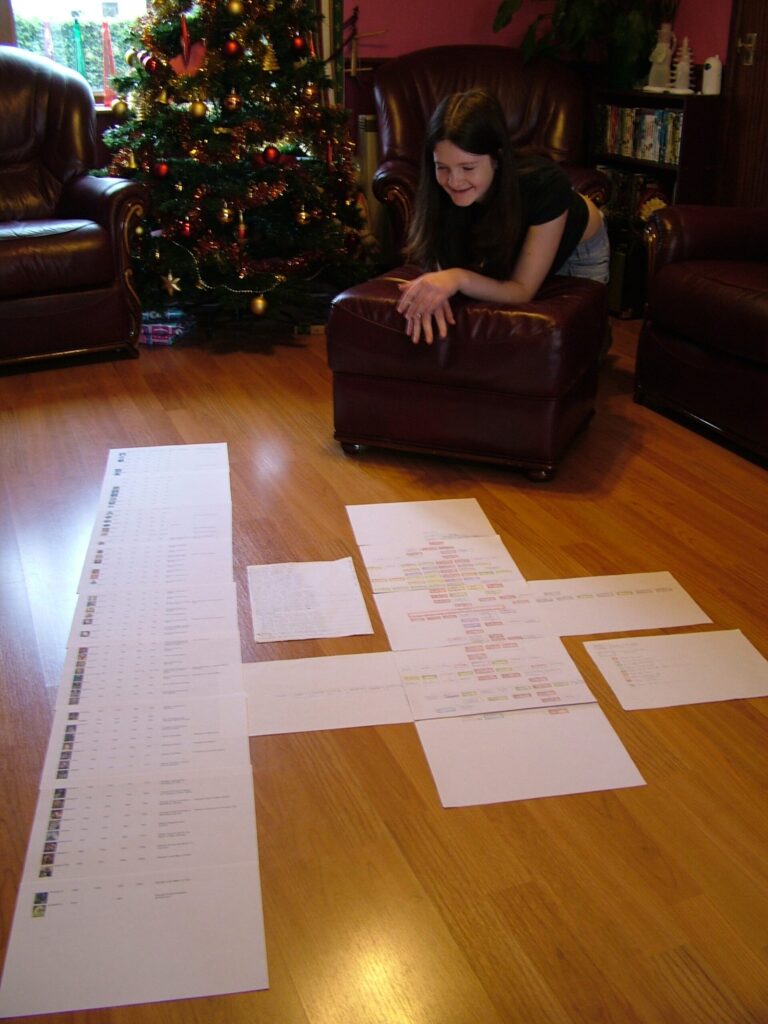
I suggested she begins with what she does know - that Queen Elizabeth II took the throne when her father King George VI died. She then googled, chatted, and plotted on a sheet of paper till she run out of room. What now?
I suggested using another piece of paper to continue, like mapping a family tree. Several months later, after countless fascinating conversations, she had traced the lineage right back to the first King of All England and stopped there. It was too complex to continue, as it unmerged to kings of the seven counties - as England was then.
What a memory she created for us, the day she laid out all thirteen sheets of paper to show us her accomplishment!
Later come the memories of my grandchildren learning about the Queen for her 70th Jubilee. At five years old, my granddaughter told me of the story of a queen and the party at school. I told her the queen was real and she laughed. I showed her, her first video of Queen Elizabeth II and immediately her face lit up. She declared what a lovely lady she was and wished she could meet her.
Now I'm wondering how I can help keep this history going, of our own family memories. A collection of times and places that people like us were, what we were doing, and what we were thinking. A parallel time capsule to Royal History.
How can I create Something my grandchildren can talk about with their grandchildren many years ahead? It's time to start memory journaling with thoughts of their future conversations with their future generations.
Imagine if you and your family started their own tradition of journaling royal events, or any other celebration that is important to your family and culture. Memories that will remain for generations.
Here's my first 'Royal' Gold Moment entry in my copy of My Journal. I have so many other Gold Moments and memories to journal for myself and my grandchildren, about so many things.

My Journal - The Gold Moments - King Charles III Coronation and memory journaling
Before jumping at recommendations for books about young adult depression, it is critical to first look at their background. If a young lover has just been rejected and hurts deeply, they will need different support than someone suffering long-term depression because the are neurodivergent.
That is why I am going to help you get the best out of your internet search for the perfect book.
Depression will be different again for someone who has suffered childhood abuse. Different again dealing with gender issues and sexual preferences, grieving, or dealing with the confines of strictly religious societies. The causes of depression are endless so where do you start?
Each individual also needs a different approach and has different preferences, values, backgrounds, and culture. There are many types of help for depression, including:
There is a great deal to think about before buying any book recommendation. What someone reviewed as five star, may or may not be the perfect book for you. It may be perfect for a second or third read from where they are now. If they read some books too soon, it can be like trying to climb up a ladder with the lower rungs missing. It makes for hard work and can feel like failure.
Looking for a young adult book about depression needs a few key words to get your search bringing up the perfect book choices. Jot down some ideas based on the clues above and dig into your intuition.
Start with basic keywords such as teenager, young adult, boys, girls. Then add some descriptive keywords about the emotions such as stress, anxiety, depression, anger issues, or grieving.
You may need to add some psychology based keywords like hallucinations, rejection sensitivity, or the term of a diagnosis. Again the options are endless with over 450 diagnosable mental health illnesses. Searching for 'Teenage Depression' will try and show you every book available about depression, with no tailored information towards these diagnosis options, or their personal circumstances.
Now you have your points noted down, you can search for what is called Long Tail Keywords. This means combining your key words to search for things like 'books about depression for young adults with ADHD' or 'books about childhood trauma and healing'. It could be ' LGBTQ anxiety in teens book' or 'teenage grief for boys'.
By searching with these long tail keywords, you are more likely to find the perfect book or books, written by people who truly understand their situation. Authors who have lived it, learned from it, and sharing to help others in the same situation.
Book vs Books is another thing to experiment with in keywords. Many promotional sites and book stores will have lots of books on a website. Google will favored these sites when you search for books. When you search for the word to book without the 's' you can often find a direct author website and learn more about their background and what's in the book, before choosing to buy.
The fact that your are even searching for books about young adult depression is a promising sign that you will find exactly what you need.
Check out my self-help book Brain Unchained
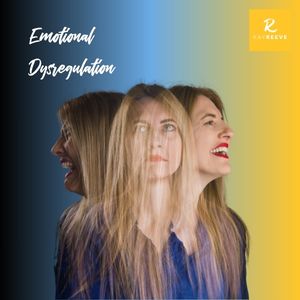
Emotional Dysregulation is about emotions being felt to extreme. Little things triggering extreme reactions. It's like asking a child to turn off the T.V. only for them to fly into a rage.
Everyone has times when their emotions feel overwhelming and unbearable. Things like exams, grief, family breakups and other circumstances can pull emotions in all directions. These are not circumstances that teenagers are trained for. It leaves them feeling like that two year old toddler who doesn't know how to handle the situation. It ends in meltdowns, outbreaks, tear and tantrums. These are hard enough emotions to deal with, but more understandable.
How often have you heard the saying "Don't sweat the small stuff"? The milder version is getting frustrated over things, like having to brush your teeth. It's being fearful over going to school or work. Depressed at doing homework, or being angry every time you get a text message. Dysregulation can be improved with emotional awareness. It earning more positive emotional language, and keeping on top of the little stuff.
The extreme version is and having no control over those emotions. Imagine (or maybe you've seen it) your teenager getting a message to meet a friend. They get angry at the noise interruption of the phone.
What about throwing a tantrum at being asked to put out the bins? Sometimes they stomp around and slam doors, because you said 'Hello' too cheerfully.
This is when emotional dysregulation becomes an issue for everyone in the home.
Imagine a toddler feeling an extreme sense of rejection when told 'no' to something simple like an ice-cream. For them it's like the teenage emotional equivalent of a relationship breakup, taking them from hope and excitement to depression or anger, in just a few seconds. Their emotions run to the extreme.
For some teenagers, this lack of ability to regulate emotions, can continue for many years. Good news is, they can improve rapidly if they get the right support and learn emotional awareness at a basic level.
What's behind emotional dysregulation can be a myriad of things from diagnosable mental health or neurodiversity, to family circumstances, medical, circumstances, or emotional trauma. People most commonly associate the term with neurodiversity, or poor emotional learning.
As a result of their root cause, dysregulation is the inability to regulate their emotions, when faced with challenges. The emotional overwhelm is because they don't have a solution for, or don't understand the barriers. Sometimes it is hopes dashed, without the language or skills to redirect the thoughts. It effectively creates a temper tantrum that they cannot control.
Each person has a different reaction to circumstances like facing a roller-coaster ride. One person may be excited, and ready for the adrenaline, even seeking it out. Another may feel fear and suffer the feelings of their body being flooded with cortisol. This fear is not a controllable feeling. When everyday life feels like these moments, taking all emotions to extreme, it affects their family, education, or work.
I have dealt with the extreme fear side myself, and still do for some things. It's only in the last two years that I've realised just how much fear I had as a child. Also how much it continued into adulthood. Being a child, I didn't understand that other children didn't have the same fears, and that mine were extreme.
I assumed the level of fear I had was normal and that parents were there to push you through things. My parents encouraged and pressured me, over and over, only to find the fear never went away. I had extreme fear of water, spiders, heights, thunder, and more. If I wasn't faced with triggers, I seemed normal, but the fear was still there in my mind. It played worst case scenario's like nightmares, even when I was awake. Learning emotional awareness ultimately helped me too.
Fear is fear and anger is anger. When a child has these extreme feelings in fear, anger, sadness, and happiness all the time, it becomes emotional dysregulation. When they switch in seconds from crying with sadness, to laughing so loud the whole street can hear them. Often they will burst into a rage, then minutes later are so depressed they talk of suicide. When little things, trigger BIG reactions like these, that's emotional dysregulation.
Emotional Dysregulation is not healthy for anyone. This is what my own son was like for years.
I never miss an opportunity to observe. I watch everything, everywhere I go. One end of the age scale I have been watching my grandchildren grow from babies, through terrible two's into childhood. Where possible, I've observed their tantrums with a whole new view, since writing my book Brain Unchained.
I've raised my own teenagers, one with clear emotional dysregulation and ASD. Rage, manic laughter, and suicidal tendencies were an every day thing for years. Then I learned this way of teaching my son how to understand his own emotions and how to improve emotional dysregulation. The change was incredible. That's what I want to share with you - HOW to improve emotional dysregulation.
This year 2024, I helped a private client going through extreme mood swings and excessive triggers. You can read more about that experience through the blog post here Private Mentoring Client Story
To the other extreme, I spent time working in a kitchen of a care home that specialises in dementia. Even from my little serving hatch I could see how some of them were stuck in sadness and anxiety. Others were constantly angry or agitated. Some sat all day with their head down and rarely spoke. A few were always the life and soul of the party. They greeted you like a long lost friend, even though you saw them minutes before.
Watching dementia, was like the polar-opposite of emotional dysregulation. Each resident was stuck in one emotion rather than swinging violently between them. Admittedly they were all capable of tantrums for the right triggers, before reverting to their own emotional base.
The anger and anxieties were similar at times, but overall it was nothing like emotional dysregulation. Dementia is not something you can fixed by teaching them Emotional Awareness. Theirs sadly, was medically and biologically irreversible, yet a little understanding by carers could go a LONG way to helping them day to day.
Some teenagers and young adults, will need professional help and/or medication to help ease their emotional overwhelm. Especially if the cause is something like Bi-Polar, ADHD, or other neurodevelopmental challenge. This medication is important and helps rebalance the chemistry that affects emotions adversely. However, there is still the awareness and learning to address as tablets don't teach.
For true emotional dysregulation, whatever the root cause, there does seem to be a way to ease the burden of these emotions. learning Emotional Awareness is a gentle and positive way forward for all the family.
Most can find peace of mind, growth, hope and improve emotional dysregulation in a way that lasts, by learning about The Emotional Cycle as the first step. I have a Free Intro Course available.
How each individual learns about emotions will differ. How much it helps in time will differ. The lessons are the same regardless, and some will take longer than others. For a teenager with severe emotional disabilities, it may be the parent that will benefit from learning. Emotional Awareness helps them to recognise their teen's emotions as signs for their needs.
Imagine three people at the scene of a car crash...
The first person panics, as they have no training and their emotions take over. They behave erratically, a bit like emotional dysregulation. They lost control of their emotions in the moment.
The second one steps forward nervously to help as they have first-aid training. They have access to some equipment and processes, but still feel anxious. They have just enough control of their emotions to focus on priorities. Trained first-aiders usually debrief afterwards, with a trusted contact.
The third person is a paramedic. They step in calmly, trained and equipped. Calm is key and they take necessary action confidently. Paramedics work as a team, use a trusted system, communicate perfectly, and get the job done. Often with a smile and comforting words.
Overview: The panicked bystander, was lacking training, equipment, and a support system. This left them feeling vulnerable and unable to cope. The result is panic. The first aider and paramedic had training with supportive people and processes to help them practice and learn. The more they learned, the better they were able to control their emotions. This means when a difficult situation happens for real, the paramedics are ready to deal with the situation.
when it comes to dealing with emotions, life is the same for teenagers. Training helps tremendously. Get them emotionally equipped with a great support system, and see how well it alleviates overwhelm.
By teaching them how to understand their emotions, and how to access that support at the right moments. It helps them learn how to overcome their barriers, anxieties, fears, anger, and helps them learn how to create their own positive outcomes.

Find my complete strategy of Emotional Awareness for Teenagers, in the book Brain Unchained. A toolkit in the processes of managing emotions in teenagers, young adults, and parenting teens.
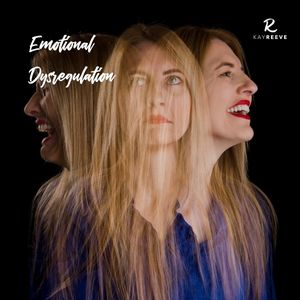
Emotional Dysregulation is a mood disorder that usually accompanies mental health disorders. A child or teen with Emotional Dysregulation senses every day emotions as if through a massive magnifying glass. What my seem small to you, may seem completely overwhelming to them.
Teenagers and adults who do recognise that their emotions are going out of control, may have extreme reactions. We know that adrenaline and cortisol play a major part in our moods. Hormones like cortisol or adrenaline flood the body unchecked and cause melt downs or outburst beyond belief. Not having the emotional tools to recognise or manage these moments, creates overwhelm, exaggerating the whole issue.
Emotional dysregulation can be exaggerated by depression or by neurodivergent challenges.
These mental health issues create additional challenges in daily life. Add the emotions of those challenges on top of teenage depression, and yes - it can feel much worse, and without hope for many.
A mood disorder is the inability to manage one's own emotions. There are developmental stages that have not been inherent learning for everyone. It is not being spoilt, overly dramatic, or pampered. It is being lost, overwhelmed, and ineffectively supported. For many it needs to be specified learning in a format that is accessible to their learning styles.
In two year old's we call this the terrible-two's, while they are learning that life has barriers. The word 'No' creates meltdowns. They have yet to learn the strategies for navigating invisible, social barriers, and other challenges. They haven't learned the strategies for listening, bargaining, rationalizing, analyzing, and other skills necessary to manage their emotions. As a result, their emotions swing unchecked.
For many children, these exaggerated emotions and reactions can continue into adulthood. Living with other disorders can add more complex and unseen barriers. Each step of development needs new strategies for assessing change, communication, seeking solutions, setting goals, and creating positive change. If they are missing these developmental steps, they will still have meltdowns.
Good news: Awareness, strategies, mindset-shift, and better communication can be taught.
Depression is usually secondary as a result of neurodiversity. It is the overwhelm of dealing with the additional challenges, and lacking solutions or effective support, that bring a lack of hope, resulting in depression. For teenagers where depression is the primary source of emotional dysregulation, there is usually a root cause to that too. Family trauma, school bullying, abuse, drugs, or other negative influences on their life can all cause emotional dysregulation.
What ever the root cause, the awareness and learning can begin even while waiting a diagnosis, or after diagnoses and alongside other treatments. Emotional Awareness is not and exclusive therapy, it is a foundation of learning.
Emotional dysregulation is not a diagnosis in itself. It is a description for a level of behavioral and emotional issues. Most schools will take the route of correctional behaviour. Doctors will treat this as a clue to neurodiversity and may refer for a clinical assessment. Therapists will often look at the circumstances. No one looks at the educational gaps in emotional learning. That's the responsibility of parents.
Every time my son had an outburst or meltdown, it was as traumatic for him as for the people around him. This was not his fault. Despite every effort to get help, he was still depressed. We had hit brick walls in the education system.
We could not make progress through the GP route after a psychologist saw him on his one good day - and dismissed him from the entire support system. This left me dealing with his emotional dysregulation alone for the next FIVE years.
If only I had known then, what I know now. Yes the dysregulation can be overlooked as a standalone issue, but awareness has improved a lot in the last 20 years. There are ways for you to help your teenager when everything else is taking too long.
Here's the thing - you're not alone. it will be ok because I did find a way to help my son. I have since used our experience to create books and courses. Explore this website to see all the ways I can share that knowledge with you.
I realised that my son was a visual learner, as are most teenagers with depression and neurodiversity. He was struggling with concepts such as time and money. How was I supposed to teach him to manage his own emotions when they're invisible?
"I was just 20 seconds from a phone call, ready to admit my son one night. As a last ditch attempt, we sat down for a hot drink and a chat - before choosing NOT to make that call."
Our Turning Point
I started with just four colours to represent the core emotions. Out of necessity, I started to develop a way to help him 'see' what his emotional cycle was. I helped him to understand that we change between emotions because something changed. How to build strategies for halting those meltdowns and outbursts.
My son quickly understood the emotional cycle diagram and the colours for Happy, Sad, Angry and Depressed. In the coming weeks, he quickly learned what caused him to change between one emotion and another. He grew more emotionally aware and took more control of his own emotions.
As he learned, my strategy grew alongside him. It took me two years to develop it fully and I tried every way possible to break my strategy over the next two years. I tested theories by watching everything possible. Only when I was 100% confident did I think about sharing the strategy to help others. I wanted to be certain that the learning strategies were as solid as possible. That they were as easy as possible for you and your teenager to learn from.
The term emotional dysregulation was a term I only recently heard. I knew what is was the moment I heard it. I knew first hand how it feels as a parent, dealing with this level of emotional challenge in your own home. Writing my book I had not used this term yet the emotions and lessons are the same. Terminology changes with the times. Emotions always stay the same. The strategy is exactly the same either way. The outcome for my son was incredible. The terminology was not crucial. What mattered was finding the right solution - plus my son being open to learning.
Having shown my strategy to many people and watched them reel back as they grasped the concepts. They called it genius, unique, and absolutely needed.
I had never aspired to become an author. I realised the power of what I had created to help my own son, and the drive to write took over.

Brain Unchained - Parenting Teens Book
The book is Not our story. I wrote it because of our story - to help you.
Brain Unchained has parent toolbox tips after every lesson throughout the book. This tips help you turn the lesson into a mentoring session with your own teenagers. This makes it the perfect parenting book to help you mentor your own child through emotional dysregulation.

What is different between EQ and IQ, or Emotional Awareness vs Emotional Intelligence? Are they the same thing? Can the both be learned? So many questions! Let's start with EQ.
There are many other terms used for EQ including
They are all ways to understand emotions and to learn ways of regulating them.
Emotional Awareness is the least used term, yet it is the foundation of becoming aware of your own emotions. It helps you understand what emotions feel like. How your own actions and reactions affect your own life and that of others around you. Emotional Awareness begins with learning to become self-aware and grows continually with experience.
Emotional awareness helps build basic social skills like empathy and understanding. It is crucial to strong relationships at school, work and at home. Children usually learn this through story books, nursery rhyme, and from family. For children with additional challenges such as ASD, ADHD, or Abuse, emotional control can be harder to learn naturally.
Higher levels of emotional management are referred to as Emotional intelligence. The word intelligence suggests it being a 'learned' topic. It means that the person has studied, implemented, and achieved in areas such as friendships, work relationships. They can moderate their emotions as needed, while also being able to help guide and moderate the emotions of others. They can offer support and conversation, often referred to as leadership skills. A few are natural at this level, but for many it is learned. Courses like leadership training and years of reading personal development books are very successful.
Let's look at some setbacks of not learning, then compare. Poor Emotional Awareness when dealing with relationship or work challenges, can lead to abuse, corruption, crime, or self-destruction through addictive behaviours. An individual may regularly feel stressed, angry, aggressive, withdrawn, anxious, depressed, or even suicidal.
Therefore the benefits of learning Emotional Awareness after helping someone to understand their emotional cycle and how it affects 'them' - will be understand why they have these overwhelming emotions, how to manage them, then extend that awareness to others in the form of empathy. They begin to remain calmer, feel less agitated or angry. They find more hope and motivation to keep going when life is tough, and discover more confidence in themselves.
This improved awareness in themselves, and therefore others. It will reduce abuse, neglect, corruption, and improve their career, relationships and social life. The benefits are endless as they continue to grow these new found skills.
Eventually EQ leads to IQ and many may develop excellent leadership skills. Even if they don't take a leadership position in work, it will still vastly improve their life. Daniel Goleman is the leading figure on Emotional Intelligence, with FIVE levels leading to IQ:
Many coaches, courses, books, and programs, teach Emotional Intelligence through leadership training, communication skills, and talk about communication through sales strategies, or customer service training. Public speaking teaches more self-awareness when it comes to presenting yourself to an audience, but none of these address the first two levels - self awareness and managing emotions. That's where I focus, as that's the part that even highly intelligent people are often missing - even in part.
Learning Self Awareness and Managing Emotions, automatically begins to build empathy. Combined, I call this Emotional Awareness - of self and others.
Parenting with emotional awareness starts to pay-it-forward, and benefit the next generation too. Not only do you parenting skills build more trust, but your teen or young adults, will learn how to function in the world more effectively too. That puts them ahead of the majority when it comes to jobs, relationships, and even self-care. Who wouldn't want that for their maturing child?
EQ is not equal to IQ. Even the most intelligent of people with a high IQ Intelligence Quotient, can lack EQ emotional intelligence. These people can become bullish in leadership positions. They tend to be referred to as bosses, or managers rather than leaders. They may be great in high profile jobs then go home to abuse their families. Some people are amazing around other people, then get in their car and become and emotional bulldozer on the road.
So you see, even if you haven't heard of Emotional Awareness vs Emotional Intelligence, you have most likely experienced them in abundance - through the effects of those who lack this vital soft-skill, and those rare people who do possess them.
Emotional awareness is relevant to all walks of life. Do you find your life is different according to your surroundings? you have probably learned to 'fit in' or 'mimic' the emotional status rather than learning to understand your own emotions. You probably find yourself calmer when surrounded by emotionally aware people, while frustrated in other areas of life.
My own son at 19 years old, was only just learning emotional awareness to overcome the overwhelm of emotional dysregulation. Every other strategy used to teach him had been unsuccessful. SMART goals were too much for him, he was a high risk to himself and chronically depressed.
At 28 years old, he is a customer experience leader (team leader). He has his own family, and is one of the most resilient people I know. He's still had many challenges to face up to, but he has become so much stronger, and fully understands when his emotional awareness vs emotional intelligence support his decisions daily.
After all those years of him feeling suicidal - all I needed the right strategy to help him start to understand all the emotional turmoil he was feeling. After years of me seeking help without success, I created the strategy myself. Here it is in my book Brain Unchained, and in my courses on this website.
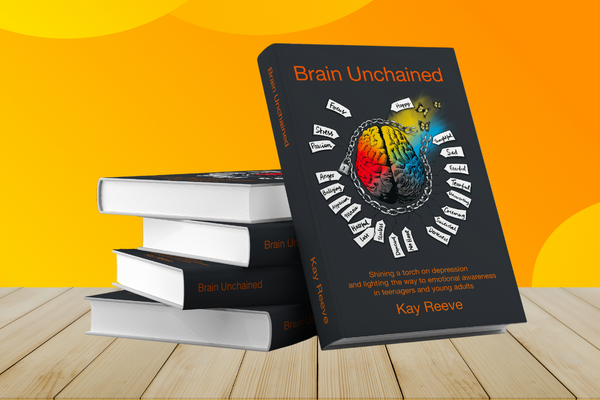
Click here to go to Brain Unchained
Now there is a way for you do start yours or your teenager's journey with Emotional Awareness. My self-help book Brain Unchained teaches the same strategy that takes you through the emotional cycle.
Using the three stages of the Mood Mentor Model, it builds a clear understanding of emotions from the basics through to emotional intelligence, with dedication and continued learning.
With this book and some adult support, teens even in depression and with neurodivergent barriers, can learn how to break down emotional challenges: Recognised the emotion, the trigger, the choices, and how to find solutions. ultimately how to manage their own emotions.
Especially as many neurodivergent people are visual learners, this book gives them a massive step up in understanding, with rapid transformation, when supported by an adult.