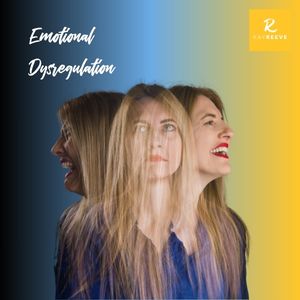
Emotional Dysregulation is about emotions being felt to extreme. Little things triggering extreme reactions. It's like asking a child to turn off the T.V. only for them to fly into a rage.
Everyone has times when their emotions feel overwhelming and unbearable. Things like exams, grief, family breakups and other circumstances can pull emotions in all directions. These are not circumstances that teenagers are trained for. It leaves them feeling like that two year old toddler who doesn't know how to handle the situation. It ends in meltdowns, outbreaks, tear and tantrums. These are hard enough emotions to deal with, but more understandable.
How often have you heard the saying "Don't sweat the small stuff"? The milder version is getting frustrated over things, like having to brush your teeth. It's being fearful over going to school or work. Depressed at doing homework, or being angry every time you get a text message. Dysregulation can be improved with emotional awareness. It earning more positive emotional language, and keeping on top of the little stuff.
The extreme version is and having no control over those emotions. Imagine (or maybe you've seen it) your teenager getting a message to meet a friend. They get angry at the noise interruption of the phone.
What about throwing a tantrum at being asked to put out the bins? Sometimes they stomp around and slam doors, because you said 'Hello' too cheerfully.
This is when emotional dysregulation becomes an issue for everyone in the home.
Imagine a toddler feeling an extreme sense of rejection when told 'no' to something simple like an ice-cream. For them it's like the teenage emotional equivalent of a relationship breakup, taking them from hope and excitement to depression or anger, in just a few seconds. Their emotions run to the extreme.
For some teenagers, this lack of ability to regulate emotions, can continue for many years. Good news is, they can improve rapidly if they get the right support and learn emotional awareness at a basic level.
What's behind emotional dysregulation can be a myriad of things from diagnosable mental health or neurodiversity, to family circumstances, medical, circumstances, or emotional trauma. People most commonly associate the term with neurodiversity, or poor emotional learning.
As a result of their root cause, dysregulation is the inability to regulate their emotions, when faced with challenges. The emotional overwhelm is because they don't have a solution for, or don't understand the barriers. Sometimes it is hopes dashed, without the language or skills to redirect the thoughts. It effectively creates a temper tantrum that they cannot control.
Each person has a different reaction to circumstances like facing a roller-coaster ride. One person may be excited, and ready for the adrenaline, even seeking it out. Another may feel fear and suffer the feelings of their body being flooded with cortisol. This fear is not a controllable feeling. When everyday life feels like these moments, taking all emotions to extreme, it affects their family, education, or work.
I have dealt with the extreme fear side myself, and still do for some things. It's only in the last two years that I've realised just how much fear I had as a child. Also how much it continued into adulthood. Being a child, I didn't understand that other children didn't have the same fears, and that mine were extreme.
I assumed the level of fear I had was normal and that parents were there to push you through things. My parents encouraged and pressured me, over and over, only to find the fear never went away. I had extreme fear of water, spiders, heights, thunder, and more. If I wasn't faced with triggers, I seemed normal, but the fear was still there in my mind. It played worst case scenario's like nightmares, even when I was awake. Learning emotional awareness ultimately helped me too.
Fear is fear and anger is anger. When a child has these extreme feelings in fear, anger, sadness, and happiness all the time, it becomes emotional dysregulation. When they switch in seconds from crying with sadness, to laughing so loud the whole street can hear them. Often they will burst into a rage, then minutes later are so depressed they talk of suicide. When little things, trigger BIG reactions like these, that's emotional dysregulation.
Emotional Dysregulation is not healthy for anyone. This is what my own son was like for years.
I never miss an opportunity to observe. I watch everything, everywhere I go. One end of the age scale I have been watching my grandchildren grow from babies, through terrible two's into childhood. Where possible, I've observed their tantrums with a whole new view, since writing my book Brain Unchained.
I've raised my own teenagers, one with clear emotional dysregulation and ASD. Rage, manic laughter, and suicidal tendencies were an every day thing for years. Then I learned this way of teaching my son how to understand his own emotions and how to improve emotional dysregulation. The change was incredible. That's what I want to share with you - HOW to improve emotional dysregulation.
This year 2024, I helped a private client going through extreme mood swings and excessive triggers. You can read more about that experience through the blog post here Private Mentoring Client Story
To the other extreme, I spent time working in a kitchen of a care home that specialises in dementia. Even from my little serving hatch I could see how some of them were stuck in sadness and anxiety. Others were constantly angry or agitated. Some sat all day with their head down and rarely spoke. A few were always the life and soul of the party. They greeted you like a long lost friend, even though you saw them minutes before.
Watching dementia, was like the polar-opposite of emotional dysregulation. Each resident was stuck in one emotion rather than swinging violently between them. Admittedly they were all capable of tantrums for the right triggers, before reverting to their own emotional base.
The anger and anxieties were similar at times, but overall it was nothing like emotional dysregulation. Dementia is not something you can fixed by teaching them Emotional Awareness. Theirs sadly, was medically and biologically irreversible, yet a little understanding by carers could go a LONG way to helping them day to day.
Some teenagers and young adults, will need professional help and/or medication to help ease their emotional overwhelm. Especially if the cause is something like Bi-Polar, ADHD, or other neurodevelopmental challenge. This medication is important and helps rebalance the chemistry that affects emotions adversely. However, there is still the awareness and learning to address as tablets don't teach.
For true emotional dysregulation, whatever the root cause, there does seem to be a way to ease the burden of these emotions. learning Emotional Awareness is a gentle and positive way forward for all the family.
Most can find peace of mind, growth, hope and improve emotional dysregulation in a way that lasts, by learning about The Emotional Cycle as the first step. I have a Free Intro Course available.
How each individual learns about emotions will differ. How much it helps in time will differ. The lessons are the same regardless, and some will take longer than others. For a teenager with severe emotional disabilities, it may be the parent that will benefit from learning. Emotional Awareness helps them to recognise their teen's emotions as signs for their needs.
Imagine three people at the scene of a car crash...
The first person panics, as they have no training and their emotions take over. They behave erratically, a bit like emotional dysregulation. They lost control of their emotions in the moment.
The second one steps forward nervously to help as they have first-aid training. They have access to some equipment and processes, but still feel anxious. They have just enough control of their emotions to focus on priorities. Trained first-aiders usually debrief afterwards, with a trusted contact.
The third person is a paramedic. They step in calmly, trained and equipped. Calm is key and they take necessary action confidently. Paramedics work as a team, use a trusted system, communicate perfectly, and get the job done. Often with a smile and comforting words.
Overview: The panicked bystander, was lacking training, equipment, and a support system. This left them feeling vulnerable and unable to cope. The result is panic. The first aider and paramedic had training with supportive people and processes to help them practice and learn. The more they learned, the better they were able to control their emotions. This means when a difficult situation happens for real, the paramedics are ready to deal with the situation.
when it comes to dealing with emotions, life is the same for teenagers. Training helps tremendously. Get them emotionally equipped with a great support system, and see how well it alleviates overwhelm.
By teaching them how to understand their emotions, and how to access that support at the right moments. It helps them learn how to overcome their barriers, anxieties, fears, anger, and helps them learn how to create their own positive outcomes.

Find my complete strategy of Emotional Awareness for Teenagers, in the book Brain Unchained. A toolkit in the processes of managing emotions in teenagers, young adults, and parenting teens.

