
Sparked by a conversation in a parenting group this week, a photo of a toy vape being held by a baby was put up for discussion. Although I'm talking about photo's here, this applies to videos too. When is setting up childrens photos for laughs, taken too far for comfort?
A few people put laughing faces at the vape toy but most agreed that this was not ok. That toys should not include anything smoking related. The photo was a step too far.
My comment was that, sadly some parents would be likely to buy the toy, just so they could photograph their baby vaping and put it on social media for likes and popularity.
This also got me thinking...
I get that it's cute and funny to dress up children in adult form. They all love being little superheroes and favourite animals. It is funny to see a baby dressed up like their great grandfather with bushy eyebrows - then photograph them together. Where though, do you draw the line on what classes as healthy humour involving children?
There are some pretty awesome photographs and MEME's going around, but there are also some very disturbing ones too. Especially when it starts involving for example, a baby in a Rasta hat, with a stogy, looking completely stoned, or a baby with a finger up and a crude caption.
I get it. It's just humour. I also get that there are different kinds of humour. Verbal, visual, written word, situational, candid moments, set-up, staged, and more, but I'm also thinking of the following points...
1. We all know the classic moment where teenagers hate the family photo album coming out in front of friends, because of their baby photos. Although a baby may be unaware of their role in making others laugh, and I know laughter is crucial to wellbeing, it is not appreciated when those photos are shared later. How will this affect them when they are old enough for someone outside the house to recognise them and tease them about a photo being not only viral online, but being used over and over for various meme's?
2. How will it affect their self esteem to know they have been used for other people's humour? Not saying don't do it, but certainly to consider the type of humour and how far it is taken, for the day they do find out. What if the photo's shared and the MEME's added, are offensive to them? That's pretty personal, especially if in high school years a photo is discovered online and becomes a point of social torment. Could a moment of fun with your baby lead to their social anxiety and depression later on? Again, not saying don't do it, but to be considerate when posting that if you were posting that same photo with yourself in it as a baby - what would you think then? Would you have been happy if your parents did it to you?
3. A good example is a teenager with a photo of their braces, posted around college with a funny saying, would be bullying. That is a form of abuse. At what point does putting any child in a funny situation with photography, become abuse? This may sound a horrendous question but it's definitely one that needs to be considered. Is it possible to subject them to situations that may seem funny to adults, but could terrify them as a child? Embarrass them later? Or leave them feeling ashamed? This could highlight emotional neglect in some families.
4. I have seen some YouTube channels where children are posing as adults for regular social media posts. Some have took part in regular family videos, while others perform in the style of a T.V. channel. This raises questions again about the use of children for entertainment. Are these children being exploited? The sets are immaculate, but it is hard to believe children want to play so unnaturally. Are they being bullied, controlled, forced or coerced into performing? When does it classify as work, or child labour?
I recently saw an advertisement for a recording software. It was advertising old fashioned office work, being replaced by AI that takes notes automatically.
I get why they chose the picture they did, of a baby girl no more than a year old, sitting in a downsized chair, at a downsized desk with an old typewriter, dressed like some 40's office worker with jacket, skirt, short socks and cute patent leather shoes. She really looked the part.
The idea was to create a comparison between old fashioned hard work and their new easy to use software. My issue was not with the advertisers, but the state of the little girl crying and the state she was in while being photographed, clearly distressed.
All babies and children cry at times, and sometimes it creates funny photos, but this little girl didn't seem funny at all. The photograph disturbed me for some reason. Being able to read emotions through expression and body language, I could see the panic and terror in her whole body. Her hands in panic mode, palms open and fingers stretched out. Her torso was tense and her eyes clammed shut, while screaming with tears running down her little cheeks.
A photo shoot can be daunting for a child who is being put in what seems like an alien situation. A child who is a little sad, afraid or uncertain and seeking support from an adult, or feeling anxious, will cry. They may also look for their parent while remaining still, afraid to move. this makes them appear well behaved while internally they are in fear.
Some will feel rejected and alone when away from their parent. Their arms will still hang by their side and their legs dangle where they sit. It's just their facial expression that will be cute or funny at first but they are feeling depression, and grieving the comfort a mother should bring.
The little girl in this photo however had gone beyond that. Her crying expression had one of breathless panic - the type where they cry but can barely pause to breathe. Instead of her legs dangling, they were extended straight forward from the knee with full tension of the shoes. Her arms were the same state, right to her finger tips. Stretched out in sheer panic.
This may have been a momentary reaction at being put down, and for all I know she may have been smiling again seconds later, but my instincts are usually pretty strong. In the moment the photo was taken, this little baby girl was terrified. This is an extreme reaction of the emotional cycle.
As a thank you for reading this far, I've linked a video of funny babies, that are not abusive in any way and genuinely delightful to watch. I hope you enjoy them, and avoid supporting the popularity of abuse through photos and videos going forward.
Back to the main question.
There are many amazing photo's and videos online that make people laugh, but when is it taken too far for the sake of laughs? That's a tough one to answer.

What is Emotional Awareness? Aren't we already aware we 'have' emotions?
Yes, but awareness it's about much more than that. It is about understanding the core emotions you have and what purpose they serve you. It's noticing which emotions you are feeing 'now'. By noticing the sensations and feelings that come up, and understanding them, you can learn to catch negative emotions early. Now you can recentre yourself, and even turn anxious or angry feelings into more positive emotions.
It's easy to notice feeling happy, sad or angry. Depression seems harder for many people to acknowledge. They often avoiding getting help, or try working through their problems alone. This is unhealthy, and leads to depression getting worse, or lasting longer. In deep depression, it can be difficult to see your way out. Emotional awareness with my books and courses, provides gentle learning to help you SEE - where you are emotionally, and learn to choose better emotions.
Understanding emotions gives you the power to
steer your own feelings, not let them steer you.
Emotional awareness helps you learn about the purpose of each core emotion and the dynamics that they display. It helps you understand why emotions change, and how you can choose to make changes too. It helps you see patterns in how you react to triggers, respond, and interact with other people - supporting your personal growth.
Imagine this... You can go for weeks without food, days without water and minutes without air, but you can barely go 2 seconds without an emotion. Many people will argue and say they rarely have emotions. They have them, but have learned over time, to stop noticing them. They have learned to overlook or bury them, and even avoid their emotions, which is not healthy. This can all change, carefully.
Becoming aware of your emotions, helps you to know what's holding you back. It builds resilience for coping with unexpected change. By learning for you first, it empowers you to help friends and family more easily. Emotional Awareness helps build empathy, and the ability to see things from their point of view. Imaging teaching someone to drive if you haven't learned yourself. It's the same with emotions. By learning first, you can pass on your newfound wisdom to family, friends and colleagues. You will also feel calmer, and more in control - what ever happens.
Not in the literal sense. As you develop personal growth, there will be times people move out of your life. These people were probably holding you back, or not ready for their own personal growth yet. It can feel very emotional, while in the long run, being a positive. You can learn more about this in my podcast episode about The circle of Influence.
This social shift can still be seen as progress - where toxic and negative people make way for more positive and supportive people - who help you progress even more. This can be a tough one to swallow at times, but in hind sight you realise it was for the right reasons.
There are no exams or certificates as this is about you and your personal growth. There is no qualification for bein human, other than breathing. My strategies are about enhancing your time being human. Everyone is different, and so is your learning style. You can learn from...
Brain Unchained - Self help book for teens
YouTube - https://www.youtube.com/@kayreeve.author
Courses - Online Courses
Mentoring - 1-1 Premium Programs
I created a way to teach emotional awareness with a visual strategy for neurodivergent teens. This visual diagram of the emotional cycle, helps bring awareness of emotions to neurodivergent individuals. Using this strategy, I train and mentor parents, teachers, therapists, mentors, managers, and leaders, to support teenagers and young adults. If you think Emotional Awareness is for you then contact me for a FREE 1-1 session and let's chat.
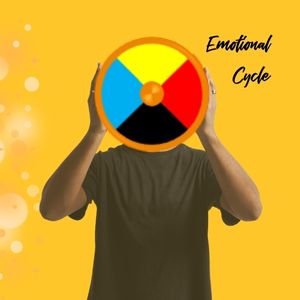
The emotional cycle governs every human being every day. It governs life it's self. Without emotions, there is no life.
Every day, every action, reaction and interaction you have, is based on an emotional decision. Even during sleep when your are dreaming you have emotions. So why is Emotional Awareness hard to learn?
Emotions often seem like something we have to put up with, and feel overwhelmed by. That's certainly how it feels in some schools and work cultures, although there are many that are taking a more proactive approach today, to ensure a more positive environment.
As a parent, I saw my son struggle with emotional dysregulation. He could not comprehend the world of emotions, as they were a messy invisible concept. By his teens he was a shell of who he could be. He was buried so deep under the depression that his true personality was barely there. How could I help him to SEE his emotions and start learning awareness in himself?
In 2016, that was the question that sparked either genius or insanity, because I haven't stopped thinking about it since. It didn't take me long to start creating a solution, in the form of colours and a diagram. That was just the beginning but it took a year to develop this diagram below. Not because the graphics are complex, but because the learning behind it had to be solid.
Children learn and inherit emotional mindsets from parents, family, friends and surrounding culture. Teenagers can find the shift into adulthood emotionally overwhelming. They face bigger challenges and setbacks than ever before. Yet they are expected to take control of their own emotions without the wisdom and experiences that life brings.
I have written a separate blog post about why teenagers struggle with teenage depression. As an adult we are expected to be in control of our emotions and yet for too many people, emotions are still very difficult to control. It seems only a minority truly master their emotions and lead the way for others.
Learning to process emotional overwhelm, can be overwhelming in it's self. Depending on the cause of the overwhelm, teenagers turn to friends, family, teachers, colleagues, managers, doctors and therapists for help. Why do so many still suffer stress, anxiety, burn out, tearfulness, grief, and overwhelm?
My son struggled severely with overwhelm, anger, and depression. We had been through that journey of searching for answers. We found a few along the way but still hadn't truly helped his depression twelve years down the line. Then I started developing the diagram above.
Emotional Awareness was the secret to my son overcoming depression. It helped me as a parent too. The first thing to realise is that being aware of emotions doesn't stop you having them. Being emotional is being human.
What emotional awareness does is help you identify your current state in the emotional cycle, using the colours on the diagram. It helps you find the changes that happened between emotions, and the root cause of the negative change. Only then can you work on resolving your emotions with the correct positive changes for your circumstances.
When parents learn this strategy and use it to mentor their own teenagers, the results are phenomenal.
It was through the need to help my own son, that I realised there is a universal pattern to emotions that happens regardless of age, race, religion, or your mental health status. I realised that even people with mental health issues, still have the same emotional cycle.
The diagram represents the four core emotions - Happy, Sad, Angry, and Depressed. The orange represents changes in emotions. When teaching my son this, we talked often about what had changed in his life and what he could do to make changes. for the better. That's where my book Brain Unchained was born.
I realised that even with my son's diagnosis of ASD I had found a way to teach him about the emotional cycle that worked. This improved his emotional wellbeing. He even recovered from depression, but his Asperger's is a lifelong challenge that will always be there.
That is why I use this diagram to differentiate between emotional health and mental health.
Regardless of mental health, emotional health can be improved. The two absolutely work in tandem, while each will exaggerate the other when one is out of sync. Mediations are crucial for many, to keep emotions in check but they don't teach someone how to manage their own emotions.
That is why I use the emotional cycle diagram, and recommend parents and teenagers learning emotional awareness together, with or without mental health challenges or neurodiversity.
Go to Brain Unchained on Amazon

